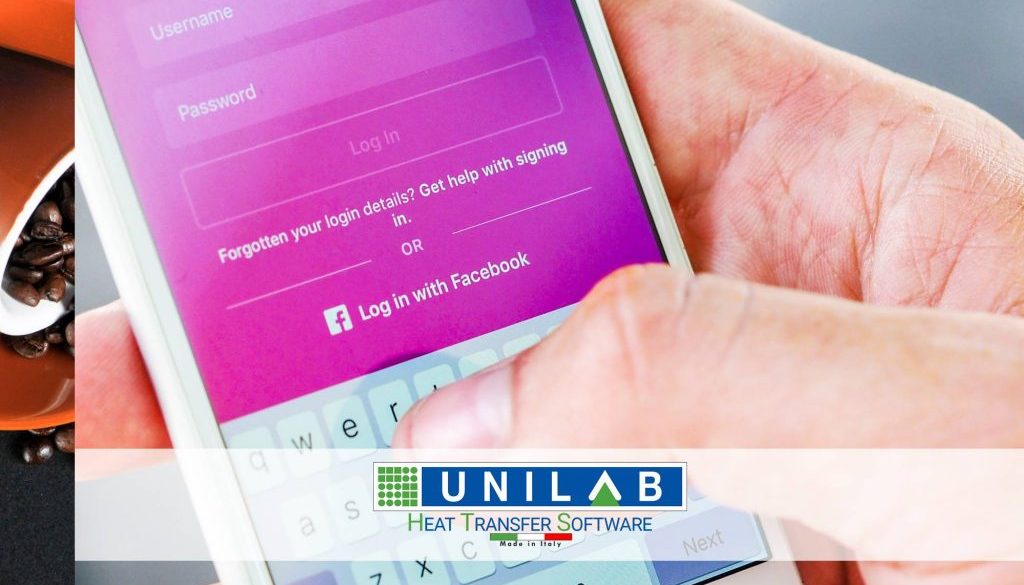
Social Network Login: why it should be avoided
The social network login, a simple action performed by millions of users every day, should definitely be avoided if you wish to protect your privacy. Its inherent danger was highlighted in September 2016 when the Facebook social network was the victim of a major security breach.
Later that month, management at the Menlo Park social network announced the discovery of a ‘hole’ in the software which had allowed some hackers to access the personal data of 50 million account users. As a precaution aimed at safeguarding data, Facebook disconnected 90 million profiles.
Facebook technicians explained that the cyber criminals had not only accessed information shared on Facebook, but also other data available via other apps. Logging into a site using your Facebook profile is in fact one of the commonest methods used to register on third-party websites and apps.
The dangers of social network login
According to recent research by a team from Princeton University, social network login and authorisation to access a Facebook profile from a website or app are dangerous procedures because they enable third party hackers to ‘get their hands on’ your data.
Such data may include your date of birth (one of the first to be entered on Facebook during the registration procedure), but also details of the contacts in your contact list. According to the results of the Princeton research, this monitoring system is extremely widespread and used by between four and five hundred of the most visited sites on the web.
How does a tracker work?
Tracking systems, which use a social network login to retrieve users’ personal data, work by creating an individual ID for each user who registers on a site or app. By using Facebook’s API, they are able to create a link between the above-mentioned ID and the social network profile of each single user.
Thus, a system is constructed which allows the website operators to retrieve users’ personal details (they are ‘profiled’ without their knowledge) and then connect this information with commercial data about their internet browsing history.
The Princeton University researchers managed to identify seven different which are capable of extracting information from the Facebook social network login API. Six of these were linked with as many companies, one of which defended itself by stating that it is no longer planning to use tracking systems due to issues with privacy. These companies develop tracking software which websites can use, subject to payment, in order to retrieve information about their users.
If you intend to protect your privacy and avoid being profiled via such methods, it is advisable not only to avoid registering with websites and apps using your Facebook login, but also to be wary of apps and games which, from the Facebook homepage, invite you to answer questions in order to find out your ‘totem animal’ or how many children you will have or which film star you most resemble.
Lots of users complete these ‘questionnaires’, without giving it much thought, as they log into a social network, failing to realise that they are almost always an instrument used by hackers to collect data to sell on the Dark Web.
During investigations into the Cambridge Analytica scandal, almost 90 million pieces of data which had been voluntarily disclosed by Facebook users was found to have been sold to cyber criminals on Deep Web forums.
Translated by Joanne Beckwith