Underwater cables will facilitate the energy transition
Underwater and underground cables are currently used to connect regions, states and even entire continents. Although they have so far been used mainly for communications, such as telephone networks and internet, work is underway to facilitate their use for supplying energy.
In an increasingly frenetic, inter-connected world, adopting renewable energy sources in order to gradually replace the largescale use of fossil fuels has become a priority. Although this is a tough challenge, with careful management of the provision and supply of electricity, it is one that can definitely be won.
The energy transition will increase the number of large cables being laid
According to an article in ilPost (accessible here), the demand for electrical power will see a drastic increase when traditional fuels are abandoned definitively in the next few years. This means that it will become essential to build new power stations to provide it and infrastructures to supply electricity wherever necessary.
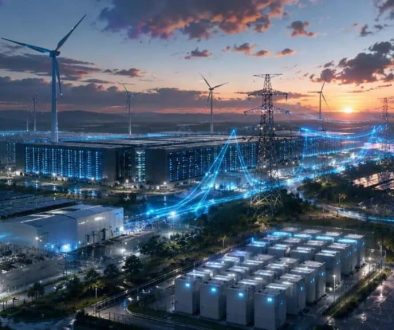
In the future, wind and solar power will probably be at the forefront of the energy transition and new generation systems able to produce electricity from renewable sources are currently being developed. Furthermore, artificial islands and other offshore solutions are being studied in order to fully exploit the power of the wind out at sea.
In contrast to what is happening with natural gas, the energy produced in all these worthy projects cannot easily be stored and must be carefully conserved during transport. In order to overcome this issue, large power stations with hydrogen batteries able to store the electricity produced are to be developed.
This explains why more and more underwater cables, hundreds of kilometres long, are being laid throughout the world, mainly by coastal states in northern Europe, although even some countries like Italy will soon have to deal with requirements to expand their power grid.
The reason for this lies in the fact that, even if wind and solar farms are built in the south of Italy, where these natural resources are abundant, industrial production will remain chiefly in the north of the peninsula and therefore cables will be needed in order to transfer the electricity produced.
Worldwide electrification via underwater cables
The complex issues regarding sustainability are leading many companies to try to find green solutions for production. Electricity is gradually gaining ground in many sectors and governments are offering attractive incentives to those choosing to make the energy switch (as reflected by the increase in sales of electric vehicles).
There is a problem however, linked to the uncertainty of electricity generation from renewable sources: compared to fossil fuels, which can be stored and used at any moment, energy produced using the wind or sun is more volatile and subject to variations in weather conditions.
This could lead to a scenario in which a power station produces smaller volumes of energy, should the wind drop or the sky become overcast, with the risk that it is unable to guarantee a constant supply of energy sufficient to satisfy increasing demand.
The fact that several states are already involved in largescale programmes of underwater cable laying to connect their respective electricity networks to those of neighbouring countries, is part of a real drive to electrify the world, aimed at overcoming the challenges mentioned above.
A global network for the transport of energy would, on the one hand, guarantee total coverage and on the other compensate considerably for any phases of reduced power supply. All this would be made possible by the use of large cables as a central and decisive feature in worldwide energy provision.
Translated by Joanne Beckwith