Renewable Energy Report 2026: why the slowdown in renewables is concerning
After three years during which clean energy registered constant growth, 2025 marked a sudden stall in the Italian renewables market. Data presented in the Renewable Energy Report 2026 shows that newly installed renewable capacity stopped increasing after reaching 7.2 GW, recording a fall of 6% compared to the previous year. This slowdown interrupts the previously positive trend and reignites the debate on Italy’s capacity to reach the objectives established as part of the energy transition.
This issue not only regards environmental sustainability, but also Italy’s energy security and economic competitiveness. In recent years, renewable sources have become a key focus of European strategies to reduce dependence on fossil fuels. Nevertheless, the current international scenario, with its geopolitical tensions, increased financial costs and regulatory instability, has made the road to development in that sector much more complex.
Growth of photovoltaic, wind power still weak
The Italian slowdown is part of a wider dynamic affecting several European countries. After strong growth generated by the Green Deal and incentives introduced in the years following the 2022 energy crisis, many economies are now recording a slowdown in investment. This is due in large part to regulatory uncertainty, reduced availability of tax break schemes and lengthy authorisation times, which continue to thwart the installation of new systems.
According to experts, the main risk is that the current slowdown could compromise Italy’s ability to achieve the climate targets which it must meet by 2030 at the latest. That prospect would have serious consequences not only on the environment, but also on energy price stability and the autonomy of the national energy system.
However, photovoltaic systems continue to sustain the Italian energy sector. In 2025, 5.6 GW of new solar capacity was installed, confirming the key role of solar panels in clean energy production. That market is driven by big utility scale systems which now account for around half of total new power capacity.
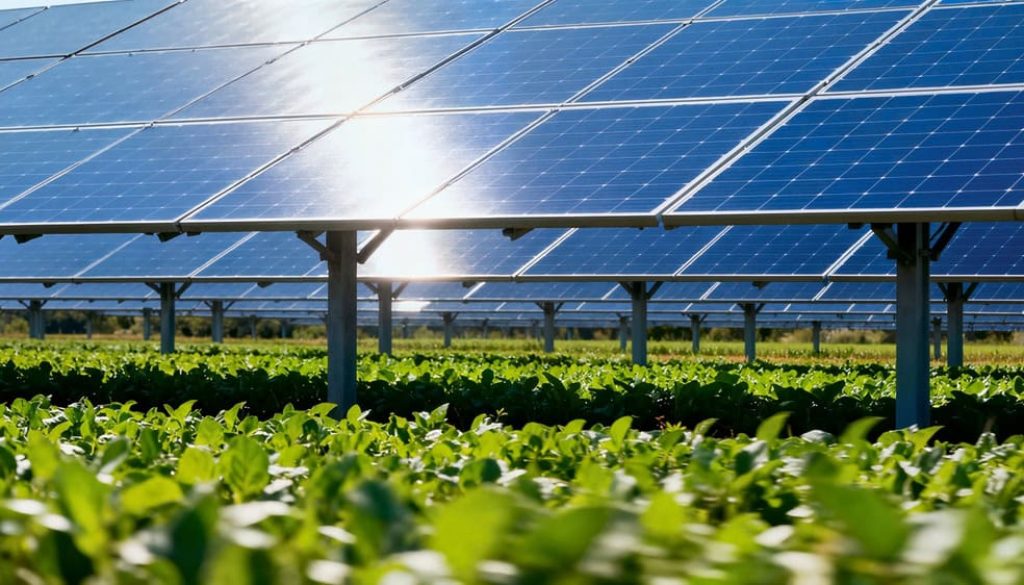
The regions of Southern Italy remain among the most attractive locations thanks to their greater exposure to daylight and the availability of areas suitable for new projects. At the same time, interest in agrivoltaics is also growing; that model allows for the simultaneous use of land for agricultural production and energy generation, offering new business opportunities for primary sector companies.
Wind power is developing at a much slower rate. New installations remain limited and are concentrated in just a few areas in the south, so they are unable to ensure the production diversification required for a more stable, efficient energy system. Authorisation difficulties are one of the main hurdles to growth of the sector, especially for offshore projects, which are undergoing significant expansion in other European countries.
The heavy reliance on photovoltaic energy highlights a technological imbalance which could lead to problems in the long term. In order to ensure the continuity and security of the electricity network, a more diverse energy mix is needed, capable of combining different renewable sources and storage systems.
Encouraging signs have emerged regarding batteries. There is growing investment in storage systems, considered essential to improve the integration of renewables into the national power network. Accumulation allows energy produced at times of greater availability to be stored and used when demand increases, reducing waste and imbalances.
Power Purchase Agreements are also taking on an increasingly important role. PPAs (long term agreements between energy producers and consumers) permit new systems to be funded, ensuring greater financial stability for investors and more predictable prices for companies.
2030 targets more and more difficult to reach
One of the most critical aspects emphasised in the Renewable Energy Report 2026 relates to how far off Italy still is from achieving the targets set out in the National Integrated Energy and Climate Plan. The PNIEC sets out that Italy must reach an installed renewable capacity of 131 GW by 2030, a goal considered essential in order to respect European commitments on emissions reduction.
At the current rate of growth however, reaching that target looks increasingly challenging. The 2025 slowdown risks adding a significant delay just at the most crucial time for the transformation of the national energy system.
This issue takes on even greater importance if we consider the increased demand for electricity expected in the coming years. The electrification of transport, the more widespread use of heatpumps and data centre growth will require ever larger quantities of energy. Without a rapid acceleration in renewable energy sources, the risk is that dependence on natural gas and imported energy will increase again.
Recent international crises have shown how energy security has become a strategic theme for governments and businesses. The volatility of gas prices combined with geopolitical tensions have underlined the fragility of systems which are over reliant on fossil fuels. Accelerating the internal production of energy from green sources therefore not only represents an environmental choice but also an economic and geopolitical necessity.
Incentives, rules and investment: priorities for the relaunch of the sector
As also mentioned in the Renewable Energy Report 2026, the main causes of this slowdown include numerous systemic problems. The reduction in tax breaks for smaller scale systems has deterred families from investment, while large operators have had to deal with uncertainty surrounding future incentives and authorisation times which are still too long.
Bureaucracy continues to represent a major hurdle to renewable energy development in Italy. Many projects remain blocked for years pending environmental assessments, administrative challenges and complex procedures. This situation discourages investors and slows down the creation of infrastructures required for the transition.
Interest rate increases have also negatively impacted the market. The increase in capital costs makes it more difficult to fanance big energy projects, especially in absence of a stable, predictable legislative framework.
Despite the difficulties, the sector continues to show great potential. Growth in energy accumulation systems, PPAs and the agrivoltaics sector shows that the Italian market remains attractive in the long term. In order to transform these positive signs into stable, continuos growth, rapid tangible intervention is needed.
According to sector operators, the priorities are clear: simplify authorisation procedures, ensure stable incentives and strengthen electricity infrastructure. Only with clearer rules and shorter timescales will it be possible to attract new investment and accelerate the spread of clean energy.
The situation depicted by the report shows a sector balanced between opportunities and critical issues. Italy possesses the natural resources and necessary skills to become a leading player in the European energy transition, but the time available is rapidly running out. Unless efficient action is taken, the risk is that Italy’s journey towards decarbonisation will be further slowed, meaning it could lose its competitive edge to other European countries.