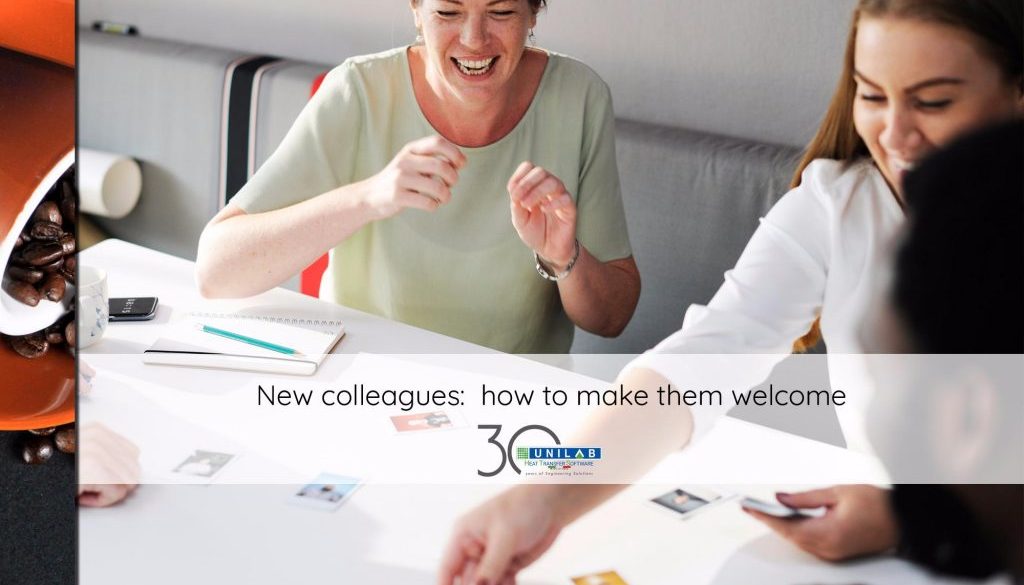
New colleagues: how to make them welcome
How can we welcome a new colleague to the office? The best way to guarantee successful team building is that of helping the new member of staff fit in right from the start, by putting them at ease and making them feel good: when someone new joins the staff there must be mutual cooperation in order to facilitate their settling in.
Considering the fact that the vast majority of new staff, as well as suffering from performance-related anxiety, are afraid of disappointing their boss, just abandoning them in front of a lifeless computer, without offering any guidance as to what to do next will only serve to increase their feelings of alienation relentlessly.
In order to welcome a colleague properly, it is essential that they find a boss who is ready to guide them in the workplace and introduce them to the rest of the team. In addition, it is important that their work space is ready to use: that means a computer which is on and a desk equipped with everything they need to be up and running straight away.
Introductions of the new colleague can be done during a special meeting or in a more informal manner. Be careful not to go overboard either with too much formality excessive familiarity, because each person is different and some may not feel comfortable with an over friendly approach.
The approach you adopt must therefore be adapted according to who you are dealing with: if for example, you are dealing with a new graduate who is feeling rather overwhelmed by the new setting you should take a friendly approach. If, however, you are dealing with a know-it-all wise guy type, it is better to put him in his place right away so as to avoid problems both in the immediate and long term future.
As outlined above, welcoming a new colleague is anything but straightforward because it is essential to find the right compromise in order to make them feel at ease in the new environment. The best advice is definitely to be clear from the start about duties to be carried out, but also about expected levels of behaviour.
In other words, we suggest a mixture of informality and familiarity with formality and professionalism. By doing this, you will be able to create a balanced relationship, which will be advantageous for both parties in their work and from a personal point of view.
Translated by Joanne Beckwith