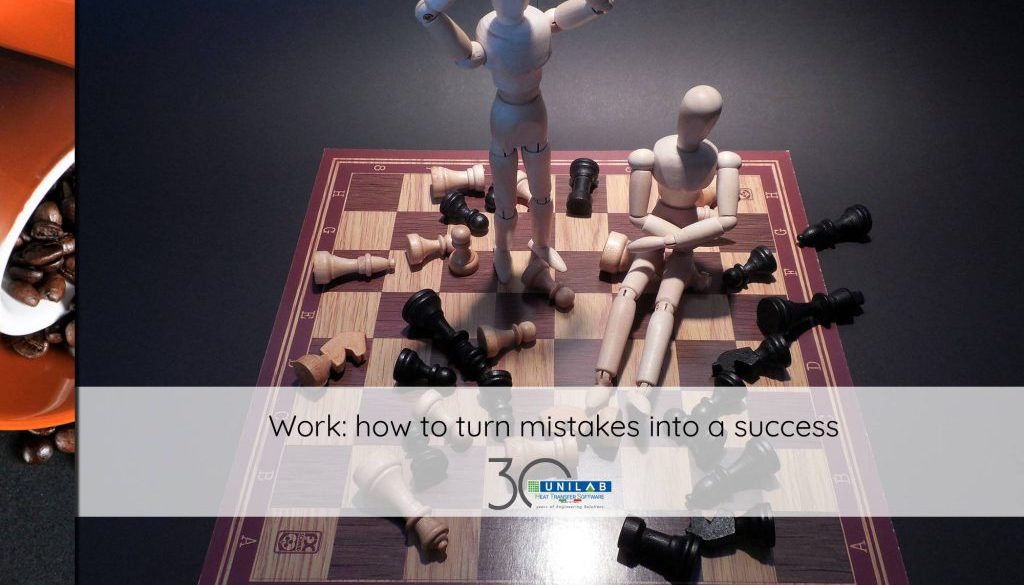
Work: how to turn mistakes into a success
How can mistakes be transformed into success? The first rule to implement in order to succeed in this is to consider mistakes as a fundamental tool in one’s growth and improvement: nobody can expect to be perfect without making mistakes, as it is through these mistakes that we learn how to overcome obstacles and to achieve more and more.
In support of this view, Soichiro Honda, founder of the Honda Motor Company, maintains that success is only achievable through regular failure and that success itself corresponds to just 1% of a person’s total work: the remaining 99% is characterised by mistakes of greater or lesser degree during the individual’s day to day work.
By doing our utmost to eliminate every mistake, we are also eliminating the essential foundations for innovation and renewal. This happens due to the simple fact that when employees are only rewarded for doing something right, they lose their inclination to take risks. It is for this reason that they are no longer motivated to come up with or design something which (with the right support) could bring great results.
According to Henry Ford, failure should be considered an opportunity: the opportunity to start again in a more intelligent and clever way. This concept is also shared by the founder of IBM Thomas Watson Sr., who after having to spend 10 million dollars because of an employee’s mistake, explained to that person (who expected to be fired) that the money spent was actually an investment in his professional training.
Another similar example is the invention of the Post-it, which stemmed in turn from the development of an experimental glue which, at the time, was considered too weak for the uses for which it was designed. Years later, an employee at the same company realised that that glue could be useful for bookmarks and in no time at all the product became a must-have.
So what tactics can be used to transform mistakes into success? Here are five tips to be put into practice as follows:
- Give employees involved in ‘intelligent’ failures recognition;
- Make a note of mistakes made, accept and remember them and do not hide them;
- Introduce a system for the monitoring of company performance which allows you to identify mistakes;
- Work out how to exploit a failure;
- Reject all that favours conservatism over innovation.
These are our suggestions for transforming errors into success: 5 practical tips to help you grow in your specific market.
Translated by Joanne Beckwith