What will be the commercial refrigeration trends of 2026?
The commercial refrigeration trends of 2026 reflect significant change, with technology becoming an operational ally, energy a critical variable to be optimised and sustainability remaining an essential requirement.
This is undoubtedly one of the most strategic issues for the hospitality and food retail industries, as nowadays, it is no longer a question of storing food correctly, but also of doing it in a smart, sustainable and economically efficient way.
For companies in that sector, understanding these trends means, above all, taking well-informed investment decisions, but also improving operational performance and strengthening their competitive position in an increasingly demanding sector.
An evolving market: more retail outlets, new formulae and less space
One factor influencing commercial refrigeration trends the most in 2026 will be the development of the foodservice market. Restaurants, fast food businesses, grab and go venues, shared kitchens and hybrid formats combining food sale with dining will all grow. At the same time, spaces will be reduced and running costs will rise.
In this context, commercial refrigeration will take on a central role, as it will have to ensure operational continuity, food safety and reliability, while adapting to increasingly compact, dynamic layouts. The operators’ goal is clear: to achieve maximum performance while reducing the space occupied, energy consumption and emissions.
Intelligent refrigeration: when cold becomes ‘smart’
A key commercial refrigeration trend of 2026 is undoubtedly the introduction of intelligent solutions based on the IoT and automation. Commercial refrigerators will not be isolated machines, but part of connected systems able to communicate data which is essential for business.
The new generation models will integrate sensors that constantly monitor temperature, humidity and energy consumption. This information will be remotely accessible via digital platforms, enabling operators to intervene immediately should an anomaly arise, even from a distance. The result will be greater operational stability and a signficant reduction in the risk of wastage and machine down-time.
Another key aspect of this trend will be intelligent stock management. Commerical refrigeration devices will communicate with inventory management systems more regularly this year, sending automatic notifications when products are about to run out or reach their expiry date. This approach will improve control, reduce food waste and enhance food safety.
It is also important to consider predictive maintenance, which according to forecasts, will constitute one of the most significant changes. Thanks to artificial intelligence, refrigeration systems will be able to analyse operational data and identify any early warning signs of potential machine failure.
This will enable maintenance work to be planned before any unexpected breakdowns happen, avoiding costly operational down-time. In 2026, this approach will not only improve efficiency, it will also extend the equipment’s useful lifetime, reducing the environmental impact caused by frequent machine replacement.
With the increasingly intense pace of work in professional kitchens, another interesting trend associated with commercial refrigeration will be the adoption of hands-free solutions. Voice control will allow operators to interact with appliances without interrupting whatever work they are doing with their hands, allowing them to work faster and more safely.
Staff will also be able to check parameters, receive alerts or supervise stock levels easily and immediately. This development will meet a genuine need: to be able to work better, faster and with fewer errors.
More capacity in the same space: the value of compact design
As mentioned above, lack of space will be one of the key challenges for restaurants and modern retail outlets. That is why it will be essential to optimise the ratio ofexternal space occupancy to internal capacity.
The most innovative solutions in that regard will offer compact structures with greater overall capacity, in order to facilitate product storage without sacrificing precious space in the kitchen or sales areas. This trend will be especially important in urban contexts, where every square metre carries an elevated cost.
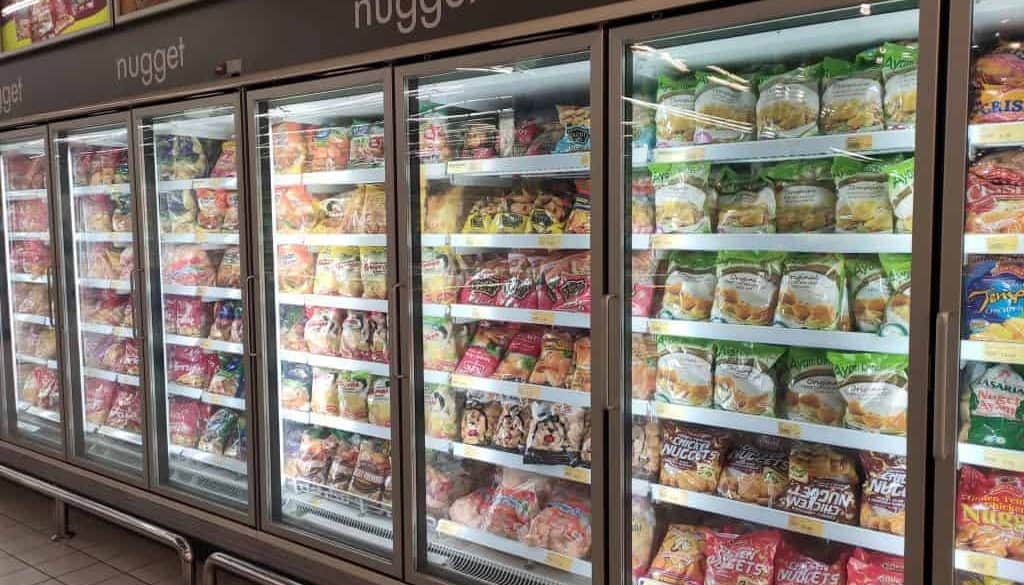
At the same time, design will also take on a key role. Commercial refrigeration will no longer be hidden from view, but will form an integral part of the customer experience, especially in retail. Clean lines, efficient illumination and maximum product visibility will build improved brand perception and stimulate impulse purchases.
Energy efficiency will be a cornerstones of commercial refrigeration in 2026. Industrial refrigerators are appliances which operate intensively 24 hours a day, making energy consumption a highly significant cost.
Companies are looking for solutions that will guarantee high levels of performance with minimal energy expenditure. More efficient compressors, advanced insulation and intelligent control systems will enable costs to be reduced, without compromising food safety.
Furthermore, considering that the choice of refrigeration system is increasingly based on total ownership cost and not just on purchase price, factors such as reliability, duration, after-sales assistance and extended warranties will become decisive factors when considering investment.
There is also the issue of sustainability, which is no longer just an add-on, but an essential requirement. One of the commerical refrigeration trends of 2026 is the adoption of natural refrigerants, which is set to be one of the most significant developments.
Characterised by their low environmental impact, these refrigerants will enable emissions to be drastically reduced, in line with increasingly strict environmental regulations.
For companies, investing in sustainable solutions will not only mean reducing their carbon footprint, but most importantly, meeting the expectations of cautious, well-informed consumers.
Decisions based on data: the future is data-driven
Last but not least among the trends of 2026 is the use of energy data to support investment decisions. Increasingly, operators want to know in advance what impact certain equipment will have in terms of energy consumption, costs and emissions.
An analysis of this information will therefore enable consumers to compare different solutions and choose whichever offers the best balance between performance, sustainability and long term economic return. This more mature and well-informed approach signals a significant advance in the way commercial refrigeration is designed and managed.