The USA’s return to the Paris agreement on climate change and its implications
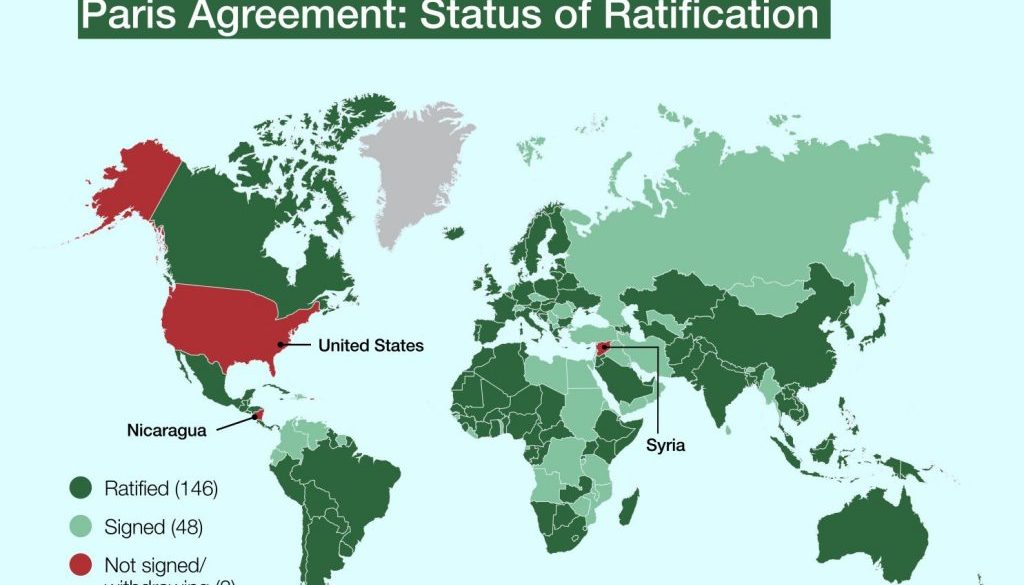
The United States’ return to the Paris agreement on climate change is official: newly elected President Joe Biden maintained his campaign promise and signed some decrees to that effect on his first day in office at the White House.
The fight against climate change is one of the most significant challenges humanity has ever had to face and this change in policy direction compared to the Trump administration restores hope that global efforts made so far will not be in vain.
Current situation in the United States
The USA’s withdrawal from the Paris agreement, announced by Donald Trump in 2017, led to much debate and concern because, as one of the countries with the highest levels of pollution, it has a much greater influence on climate change than many other nations.
The former US president has always based his environmental policies on a negationist standpoint, accusing meteorologists of unjustified scaremongering. In line with this approach, he therefore signed waivers, repealed laws, permitted new drilling fields and supported oil companies in their aim of relaunching the coal industry.
Furthermore, he also approved the construction of the Keystone XL oil pipeline project, which would have enabled the extraction of crude oil from the bitumen soaked sands of Alberta in Canada, considered to be one of the dirtiest fossil fuel sources in the world.
Although this might give the impression of a disastrous situation in the United States, the Energy Information Administration (EIA) has released some encouraging data, such as CO2 emission levels, which fell by 10% in 2020 thanks mainly to the coronavirus pandemic.
The US Energy Department’s statistical and analytical agency has also explained that compared to 2007, carbon dioxide emissions have fallen by 23 percentage points. This target was achieved mainly due to investment in renewable energy such as wind, solar and hydroelectric.
The impact and consequences of the US return to the Paris agreement
Despite a certain amount of negationism and agreement with the former president among many companies connected with the oil industry, many other businesses, communities and even entire nations have decided to distance themselves from Trump’s ideas, by forming a movement called ‘We are still in’, which has made its voice heard internationally.
It is mainly due to the efforts of those people that the US is now able to return to climate negotiations without too much trouble. To enable the US to return to the Paris agreement, all that is required is that they wait thirty days following Biden’s declaration to the UNFCCC (the UN Framework Convention on Climate Change).
This change of direction brings some political consequences and a strong symbolic message of renewed openness towards overseas nations; this could perhaps stimulate countries who had previously signed up to the agreement during Cop 21 in 2015, but have so far maintained somewhat ambiguous and ineffective policies, to take more decisive action.
Climate negotiations at Cop 26 Glasgow
The return of the United States to the Paris agreement will allow US delegations to take part in Cop26, due to be held in Glasgow next November. The world climate conference is one of the most crucial round table events in the fight against pollution and the safeguarding of the environment.
Joe Biden’s first steps on this issue seem positive and encouraging but in order to be able to confirm the US’ efforts regarding environmental issues more definitively, we will have to wait until the official meetings and hope that the promises made by the new president during his election campaign will be honoured.
Translated by Joanne Beckwith