Are there alternatives to gas? Issues and potential solutions
Alternatives to gas have gradually become a necessity, especially in light of the current global energy crisis and its unavoidable, ongoing repercussions.
As a result, in those nations who depend on imports of this raw material, a complex quest for efficient, fast and economically sustainable solutions has begun.
Of course, the problem could be partially resolved by improving autonomous energy production capacity, but devising effective strategies capable of resolving the situation, even in the short term, is no easy task.
Is it possible to live without gas?
Many people are wondering if finding better alternatives to fossil fuels is really possible. Although we can imagine a life without gas (at least in theory), in practice it turns out to be rather problematic.
Regardless of the economic aspect relating to its import and export (the interruption of which would lead to a global market collapse), there are some crucial issues to be resolved, such as the actual quantity of energy obtainable from other sources.
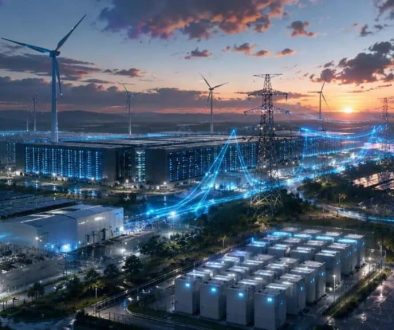
In Italy for example, wind farms and solar energy plants are becoming more widespread, but in numerical terms, growth in this sector remains slow. This is partly due to bureaucratic issues and partly to the inability of such plants to guarantee constant production.
In fact, the production efficiency of these renewable sources depends to a great extent on meteorological factors and the geographical conformation of the area where they are built. This means that on days with little wind or not much sun, the energy generated might not be sufficient to meet demand.
Is increasing the number of regasification plants the right response?
The less than perfect reliability of current alternative energy sources has led the government (at least for now) to focus on solutions which can be implemented in the short term. This has resulted in a proposal to increase the number of regasification plants to exploit LNG (Liquefied Natural Gas) more extensively.
Currently, Italy’s three regasification plants are able to meet approximately 20% of national demand. By enabling the completion of the two other regasification plants currently under construction in Gioa Tauro and Porto Empedocle this coverage would be further extended.
Compared to coal and oil, methane, the main component of the LNG mixture, is considered the least polluting fossil fuel overall. It also has some specific advantages such as:
- it generates few by-products during combustion;
- it is readily available in the natural world;
- it can be cheaply and safely transported when transformed into its liquid state.
According to experts, it should be viewed as a ‘transitional fuel’, to be used temporarily until the performance of renewable energy sources can be improved.
Contradictions, Government requests and initiatives
There is, however, a significant hurdle resulting from increasing the number of regasification plants: this strategy goes against the efforts Italy has made so far in its drive towards achieving carbon neutrality by 2050. Although LNG is less polluting than other fossil fuels, it is still one of them and as such, only adds to the current climate issues.
The debate is still raging, with the Government asking Europe for the creation of shared storage projects, in order to ensure gas supplies even in times of crisis. The RepowerEU plan is still under discussion at the European Commission; it stipulates that storage sites will be 90% full by October 1st each year.
There is no shortage of proposals aimed at incentivising the energy transition in all EU member states. Among the most significant are state subsidies, proposals for the development of national green energy plans and bonuses for the installation of renewable energy systems.