Man and the environment: soft technology
Soft technology and heavy technology: in what way does the man-progress-environment relationship affect the wellbeing of the planet? Whatever the technology used, it always causes some environmental impact resulting from its production processes, but in order to find out more about this issue we will try to shed light on two concepts of primary importance.
While heavy (or hard) technology has an influence on the environment due to its massive consumption of natural resources and the pollution caused, soft technology, as well as having a lower impact, allows for a more rational use of the materials used and is based on the use of certain resources, such as renewable ones.
The main problem with the impact of technology on the environment, stems from the industrialisation which took place in the nineteenth century. In that period, in an effort to satisfy the growing demand for products, production processes were intensified so greatly that this started to have a negative effect on the planet’s wellbeing. Since then factors such as smog levels, the hole in the ozone layer etc. have continued to get worse.
However, soft technology, in some cases, can be so advanced that it can help the environment, for example, through the requalification of polluted areas or by safeguarding certain resources. This technology can even substitute humans in more dangerous jobs, using robots capable of carrying out tasks exactly like a human being.
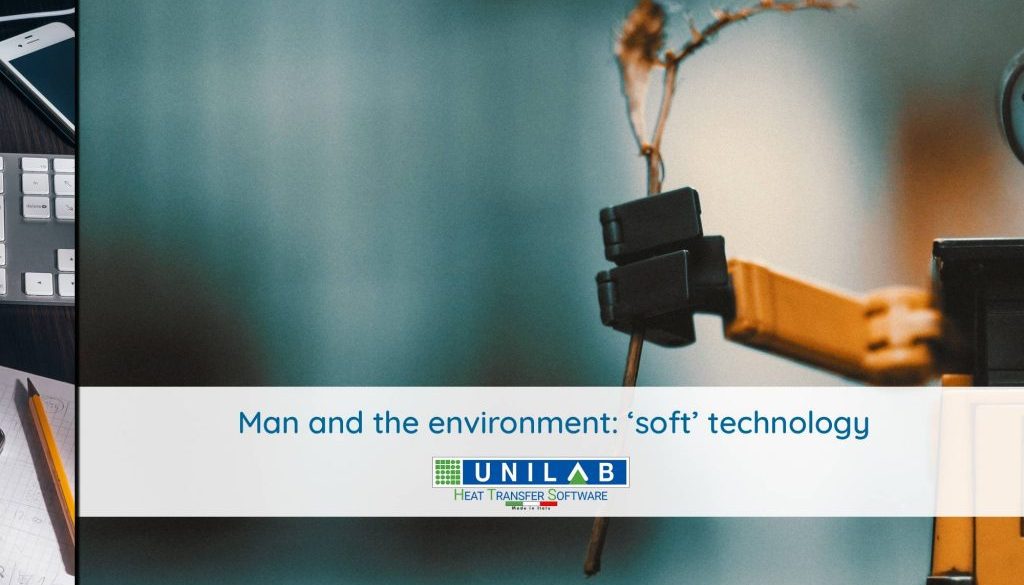
This is the case of the so-called ‘soft robotics’, which centres on the use of robots built from soft materials. These prototypes will in the future be fitted with technologies able to recreate strategies used by human beings. For this to be successful, the inspiration comes from both the animal and plant world.
The objective is certainly to enable such robots to develop incredible abilities, such as healing themselves, growing or changing shape. All this aims to create and spread prototypes which can become really well-integrated into people’s daily lives. In practice, the robots of the future will want to re-create themselves based as closely as possible on the natural world that surrounds them, including man.
In order to succeed in this, it is of course necessary to use soft materials, which render movement more harmonious, while making the robots resemble human beings. They will no longer be obviously artificial devices, but constructed so that they really seem to have muscles and resemble living beings.
In soft technology, Italian robotics plays a key role and thanks to its actions, progress and insight, has made a fundamental contribution to progress in this field. It is an area under continual development, which focuses above all on the continuing assessment of the capabilities robots have developed.
Today, robotics and soft technology are mature enough for a quality upgrade, which will allow robots of the future to interact better with people. The prospect is that they will be able to do things such as move around with agility, change their appearance or even learn procedures in order to carry out tasks required of them.
However, it is only possible to achieve such results through the study of nature on the one hand, and the development of related technologies on the other. These are essential pre-requisites, which will allow humans to exploit the possibilities offered by technology fully. This progress, whose speed has gradually increased over recent years, has become an essential element for the entire planet.
This concludes our round-up of the latest developments in soft technology: very important changes, which may lead to people’s daily routine being radically transformed. Of course, this all depends on how much we will manage to discover, but the results obtained so far can only suggest a very positive outlook for the future.
Translated by Joanne Beckwith