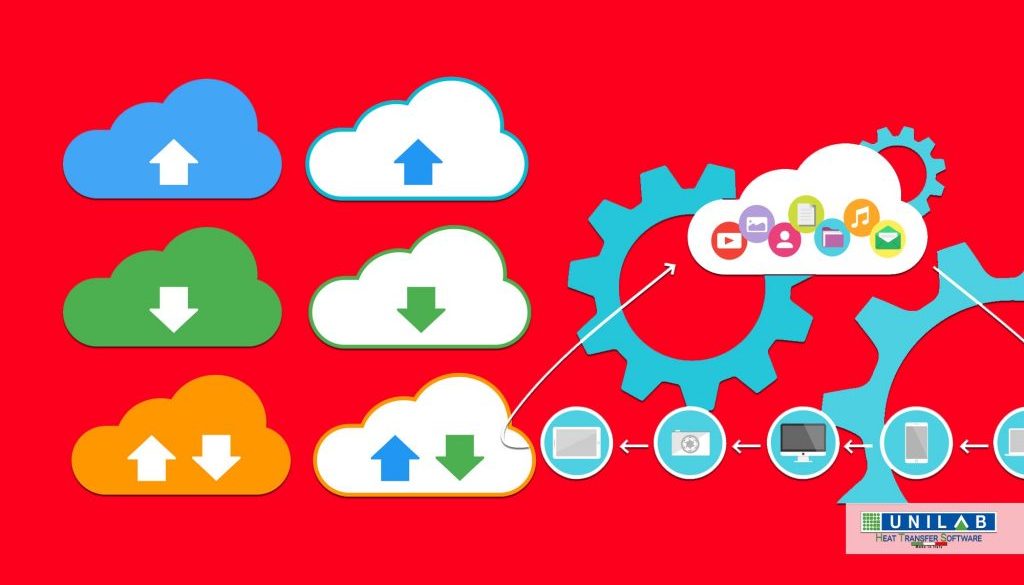
Cloud hosting, servers, private cloud – how to find your way through the cloud jungle
The term cloud has entered common usage over the last few years and is often wrongly interpreted as referring to the basic concept of online storage. However, its true definition is much more complex and includes a wide range of on demand services which can be accessed remotely.
The feature which may be used to distinguish between these services is their accessibility. They can be accessed by anyone in any location, via an ordinary internet connection. Considering that users often confuse them due to the vast number of services available, some clarification is required.
The features of cloud and how it works
The best way to understand how cloud works is to imagine a network of computers connected to each other, supplying services to users via the internet on request.
These services include online storage, cloud computing and ready for use network infrastructures or applications.
Users can rent one or more of these services and use them from the convenience of their own devices, without the need to purchase any hardware components. This results in considerable savings, making cloud systems a precious ally for both businesses and private individuals.
There are some specific features which provide more detail regarding the distinctive features of the various cloud services:
- Each cloud service must be able to virtualise and partition the resources shared on the system it belongs to. The purpose of this is to guarantee high levels of personalisation for the end user of the service, while maintaining security;
- Human intervention must not be required for provision of the services. This must happen autonomously and quickly at the client’s request;
- Those using the service must have the option to personalise it, either by upgrading or simplifying it, so that they only pay for what they really need;
- It must be possible to access cloud services from any location, using any device connected to the internet;
- The costs of the services must be clear and users must be able to constantly monitor how much they are spending, based on either usage or time.
Which cloud service is the right one?
The type of cloud service should be selected according to the user’s requirements and configured so that they do not end up paying for things they do not need. Below are a few examples of the most common services supplied to companies and private individuals, to help clarify which might be the most suitable:
- Public Cloud: generally used for cloud computing, this model allows several users to use the hardware and software (both owned entirely by the service provider) contemporarily;
- Private Cloud: in this case resources can be entirely or partly owned by the service provider, but only one specific user can access them (an ideal solution for companies requiring very high standards of security);
- Cloud Hosting: a service hosting websites on a network of physical (or virtual) machines accessible to all users of the public cloud. The feature that distinguishes it from traditional hosting services is the option to modify the available resources according to requirements;
- Cloud Server: very similar to cloud hosting, only that it allows greater versatility in terms of the use of resources. The servers are virtual (VPS) and, in contrast to their traditional counterpart, they are not hosted on a single physical machine, but on a public cloud infrastructure.
With a more detailed knowledge of cloud, choosing the best option becomes much easier and quicker.
Translated by Joanne Beckwith