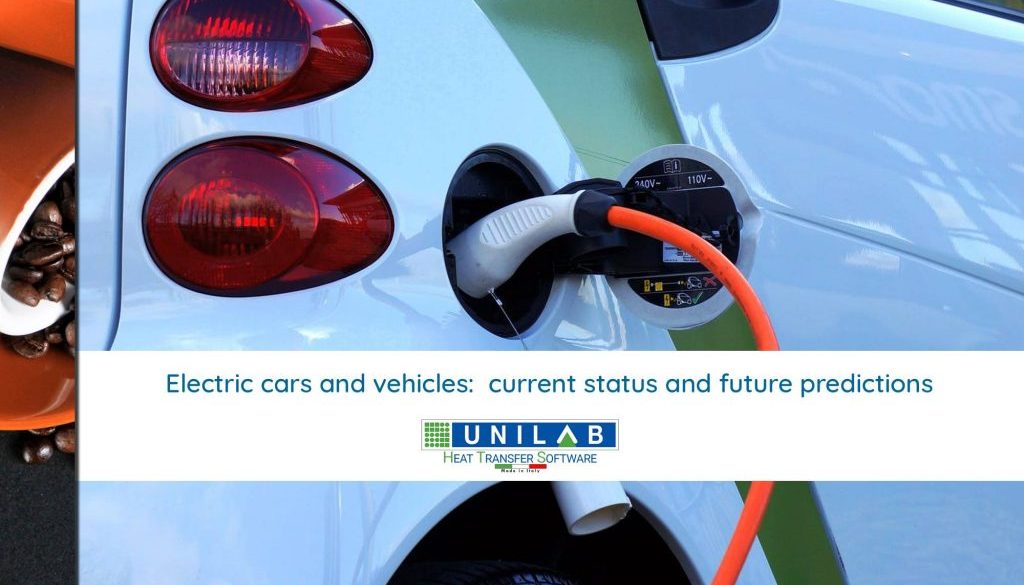
Electric cars and vehicles: current status and future predictions
Electric cars are part of a continually expanding market, which has developed significantly as the Tesla has become more widespread. Such vehicles are fitted with rechargeable batteries and are powered exclusively by electricity.
At the present time we can observe that these cars have the double advantage of offering savings on fuel and a reduced impact on the environment. Disadvantages on the other hand, include their high retail price and limited battery duration.
Despite that, public interest in this sector increased six-fold between 2013 and 2017, including both exclusively electric and hybrid vehicles (those powered by both a petrol and an electric engine).
These important results are a consequence of technological advances, a wider range of available models and the environmental policies adopted by some countries (in certain countries those who choose electric cars can claim financial bonuses).
In Italy for example, the 2018 Budget does not guarantee bonus payments for people who buy electric cars, but instead it offers incentives to those who own one.
These include:
- exemption from car tax in almost every region for the first five years;
- unlimited access for electric vehicles in restricted traffic zones in the larger cities;
- and reductions on third-party insurance.
Of course, all this is not sufficient to make consumers buy these vehicles, but by reducing costs, improving battery performance and increasing the number of charging stations, a clear change of direction can be achieved.
The real problem (for the Italians at least) is that, while in Europe sales of electric cars rose by 33 percentage points in the first quarter of 2016, in Italy the percentage remained negligible.
Let us make a simple comparison to illustrate this point: while electric cars make up a mere 0.01 % of all the cars registered in Italy, in the Netherlands, the equivalent figure is 10% and in Norway it is as much as 25% of the total.
The most perplexing thing is that Italy does not lack qualities and skills such as engineering know-how, innovation, culture and taste: factors which should already have propelled the country towards the mind-set which has become so widespread among Nordic countries.
At present, in any case, the Italian population is not sufficiently motivated to change direction or to modify its purchasing habits. State bonuses and incentives for those who buy electric cars might be the most effective way to encourage this.
Such a policy has worked well in France, where a state contribution of 6300 Euros was offered to citizens, stimulating growth in the entire car market. If similar incentives were proposed in Italy, major and decisive progress on this issue would finally be possible.
As far as the future of these vehicles is concerned, the Managing Director of FCA Mr. Marchionne declared that by 2025, more than half of the vehicles in circulation will be electric or hybrid. Furthermore, China has promised to eliminate by petrol and diesel powered cars by 2020.
There have also been important statements on this matter from Uber, who have undertaken to make all their London vehicles electric by 2020. That is not all: recently, they have moved into the car sharing market, with the launch of services like Car2go.
This concludes our brief summary of developments and predictions relating to the electric car sector: a sector which is not yet highly developed in Italy, but which we must focus on if we are to become more environmentally-friendly.
Translated by Joanne Beckwith