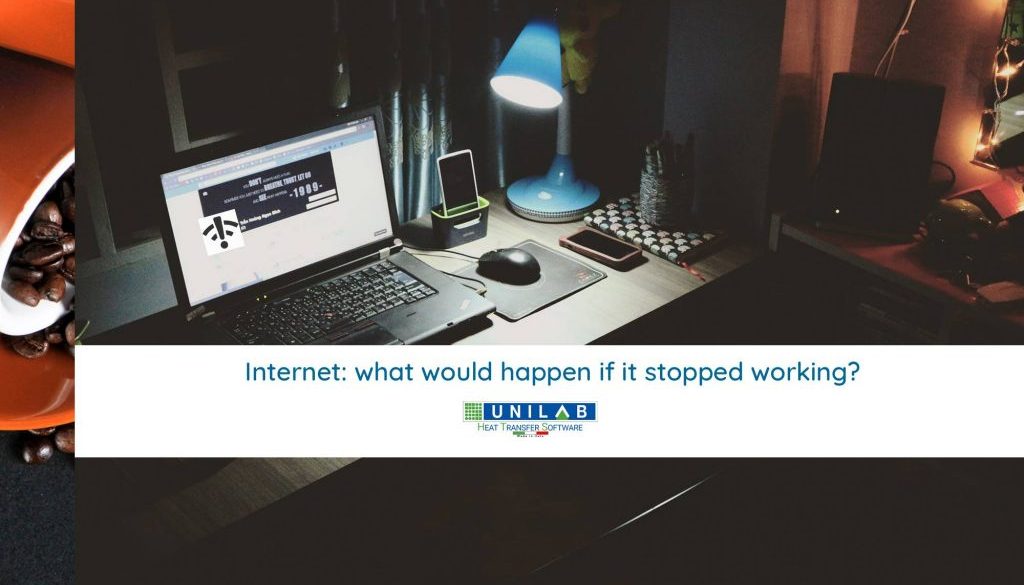
Internet: what would happen if it stopped working?
What would happen if the world was suddenly without Internet for one or more days? Despite the risk that a lot of people might go crazy in such a situation, the real impact on society and the economy would be almost negligible, according to a study by the BBC.
Of course, the web is nowadays considered a sort of constant presence in people’s lives, but a more or less total blackout of the net is not only a realistic possibility, but also an event which has already happened in the past.
For example, in 2008, a technical issue affecting the undersea cables which carry data between continents, caused a blackout of connections in the Middle East, India and South-East Asia. In 2011, due to political reasons, the Egyptian people were left without internet during the Arab Spring.
The same thing has happened more recently in countries facing difficult circumstances, such as Turkey or Iran and it could also happen in China, where for a considerable amount of time, the web has only partially worked.
As explained by the director of the Cyber Consequences Unit Scott Borg, life without internet (and without any negative consequences) is possible then, providing that the connection is only down for a period of less than four days.
With a short blackout period such as that, even those businesses which rely on the web the most (hotels, brokers, etc.) can manage to limit their losses and, in some cases, even increase their productivity (because without the web, employees tend to carry out the tasks that they normally put off).
Having said that, it should also be emphasised that an absence of internet affects certain types of businesses and/or professional figures more than others: those most affected are small and medium businesses and professionals such as plumbers or carpenters who need to be contactable at all times.
Despite the social and economic damage caused by a temporary lack of internet generally being minimal, an internet failure can cause real anxiety in people, due to the impossibility of communicating with everybody at any time.
As Professor Hancock of Stanford University explains, individuals are so used to having such easy access to other people, that the simple idea of not being able to contact them (even for just a few hours) can cause them significant worry.
Hancock also maintains that, seeing as the main purpose of the web is to connect one individual to another, the inability to do this sometimes turns out to be quite disturbing.
In the last few years, individuals have reached such levels of dependence on internet, that they can even become paranoid when they accidentally leave their smartphone at home. Such an oversight can often turn into an overwhelming and un-manageable situation.
In addition to this dependent relationship between people and the web, it is also necessary to disprove those who believe that people who do not use the internet are more sociable than those who use it. According to a recent study in fact, those who often use the Internet, especially Social Networks, interact better with others compared to those who don’t.
As is apparent from the points mentioned above, the consequences of remaining without internet for a certain length of time vary according to who has to deal with the problem (private individuals, professionals, large or small businesses etc.). The most incredible thing however, is the fact that although being offline for a few days is not a problem for the global economy, it can be a serious one for many people.
Translated by Joanne Beckwith