Leonardo supercomputer will revolutionize the way research is done
A few days ago the Leonardo supercomputer was inaugurated in Bologna: a unique machine of its kind, capable of achieving 240 million billion operations per second (an amount comparable to the activities performed by 8 billion people, working in unison every second for an entire year). Small interesting detail: the supercomputer is cooled by equipment selected by our Unit Selector HYBRID software, and designed with UNILAB COILS!
Of course, this is undoubtedly an extremely ambitious project, but the collaboration between the Ministry of Universities and Research, Cineca (the Italian Interuniversity Consortium) and the European Union has made it possible, thus enabling the Emilia capital to join the nine Italian cities that are members of the EU smart city network.
Record-breaking numbers for Leonardo supercomputer
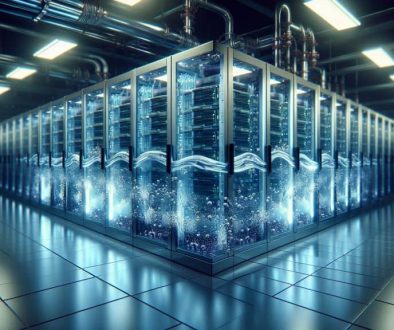
The immense computational facility that gives life to the Leonardo supercomputer is housed in the northern outskirts of Bologna, inside the former Manifattura Tabacchi. A space of 700 square meters contains 9 different rows, each consisting of 155 raks (large shelves that contain the true heart of the huge calculator).
Each rak includes something like 32 boards that act as boost nodes for the complex network, and in total there are 3,500 nodes that give a computational capacity of 174 Petaflops (set to reach 240 Petaflops in the coming years) and the ability to store up to 100 Petabytes of data.
The computer achieves a total weight of 340 tons (including metal, chips and various cables), supported by a floating floor that is traversed by 4 technological tunnels, capable of connecting the machine to as many cooling stations (essential to ensure its full operation).
The whole thing cost approximately 240 million euros, but to this must be added another billion euros for resources distributed between data-center and related scientific infrastructure. In practice this is undoubtedly a titanic project, which should enable research to be done in a completely new and far more efficient way.
Although Leonardo will be officially launched in April 2023 (since a thorough preliminary testing phase is still needed), there are already more than 1,500 researchers who have booked a session with the supercomputer (numbers, however, that are destined to grow further, especially considering the fact that Bologna’s computing pride will not only deal with science).
A wide range of possible applications
Supercomputers such as Leonardo are crucial when trying to find concrete answers to questions subject to the influence of multiple variables. Examples of this include making plausible statistical predictions, preventing catastrophic events (changes in weather, earthquakes or volcanic eruptions), medical-scientific research, monitoring climate change and improving environmental safety.
The first “customer” that has applied to take advantage of the supercomputer’s abilities (totaling more than 1 million hours of calculations) is a private pharmaceutical company engaged in the creation of new medicines. Its main goal is to speed up the response to possible pandemics (such as the recent Covid-19 pandemic), ensuring faster production of drugs that are as appropriate as they are effective.
The example in question, however, represents only a small step toward what already appears to all intents and purposes to be a kind of genuine revolution: for experts, in fact, Leonardo will soon find application in the manufacturing and public administration landscape as well, especially when it is juxtaposed in 2024 in Italy with the quantum computer and in 2026 in Europe with the post-exascale computer.
In addition to all this, we must then also consider how interesting the next few years will be for the academic world: a sector that (thanks precisely to Cineca’s efforts) will finally be able to rely for its research programs on a top-notch machine (considered among the 4 most powerful pre-exascale machines in the world), ready to become a reference point for the global scientific community.