Possession versus streaming/access: evolution or involution?
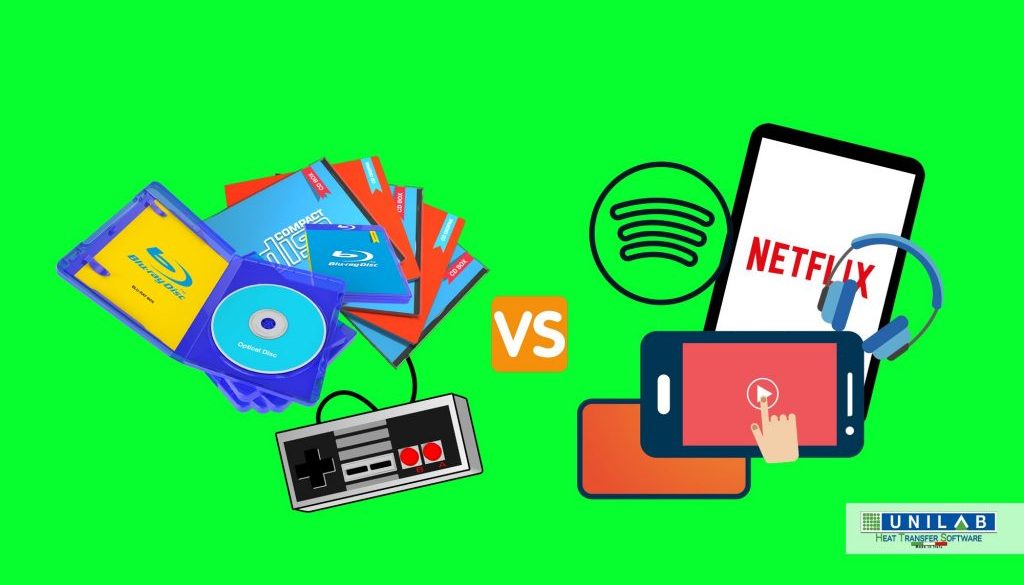
Digital streaming is a process which allows users to access content such as music, film or other media, via an internet connection. This new system is slowly replacing the physical possession of CD’s and DVD’s, including digital licences purchased from online stores.
Many people are wondering if such a rapid change, although much appreciated by the public, will have a negative effect on the entertainment industry, in its many forms. Such concerns are well-founded, but before taking a closer look at these issues, we should first consider how the current situation arose.
Before streaming there was possession
Not that many years ago, before internet was widely available and when mobile devices consisted of a limited range of phones, the only way to listen to music away from home was via physical means, or more recently, in digital format thanks to MP3 players.
With the exclusion of pirate material, if you wanted to listen to songs by your favourite artists, you had to purchase them from a physical shop (on a CD for example), or from an online store. In other words, you had to possess a specific form of ‘listening rights’.
This scenario was totally revolutionised by streaming, which meant it was no longer necessary to purchase individual songs: it is now sufficient to take out a monthly subscription, which guarantees full access to vast online libraries.
Why has streaming been so successful?
The success of streaming is mainly due to two factors: the first is the mass ownership of smartphones (portable multifunctional devices which allow the user to remain connected at all times), while the second is the increase in bandwidth available for mobile networks (which provides much more data traffic at a minimal cost).
The opportunity of no longer needing to carry out procedures such as downloading material, uploading it onto a device or purchasing each individual song or video, has made streaming popular and has led it to become a sort of cult for the new generations. In fact, the convenience offered by this type of service is undeniable and users can no longer manage without it.
Concerns and the potential damage caused by streaming
While, on the one hand, streaming offers the public many advantages, on the other, it poses a potential risk for producers and artists involved in the making of films, music and videogames. All too often in fact, they end up receiving fees which are derisory in comparison with the enormous earnings of the platforms on which their products are distributed, resulting in huge losses in terms of income.
In other words, this has led to an involution of the sector, the blame for which does not lie with the streaming system alone. More attention should also be focused on the less than transparent agreements between record labels and the distribution platforms, which often pay the artists and creators of the material as little as 15%.
It should also be noted that, in recent years, streaming has had the positive effect of managing to relaunch sectors which were previously stalling, such as the music industry, allowing thousands of users to access content legally. This has contributed, albeit indirectly, to a decrease in the amount of pirate material in circulation, which, during the era of digital content on payment, was almost suffocating the market.
In conclusion, it is safe to say that streaming remains the most convenient choice for users and, if well-regulated, could also bring enormous earnings for artists.
Translated by Joanne Beckwith