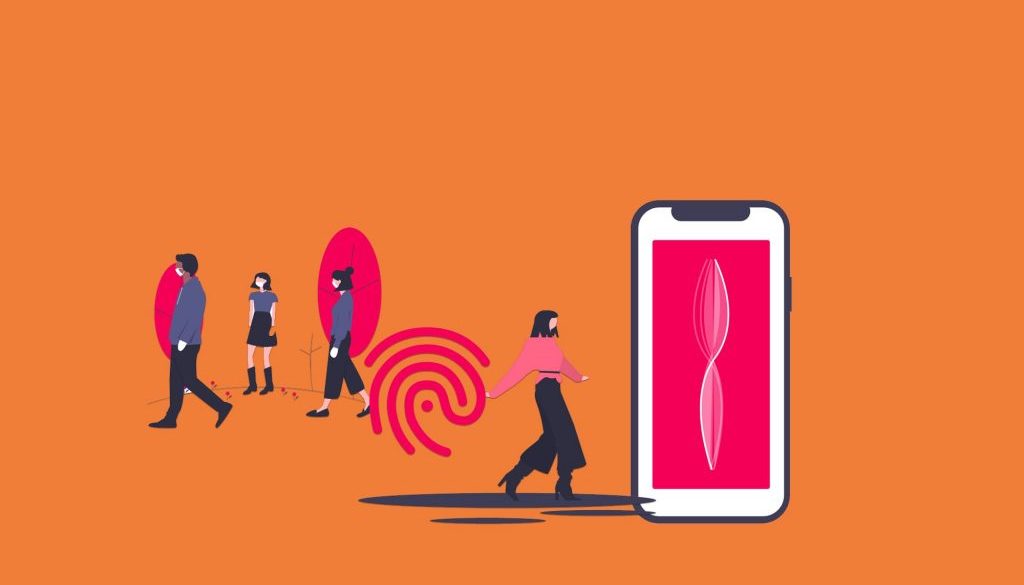
Tracking apps: how they work
The anti-coronavirus tracking apps developed by several countries have become a subject of debate and some consternation among many people who feel threatened by them and who are voicing their concern. However, this reaction is often based on a lack of real knowledge of how such systems work and the objectives of the software.
The aim of this technology is to keep track of areas where infection has taken place and infected people, without violating those individuals’ rights regarding privacy. The use of these applications, as well as being voluntary and anonymous, is based on data exchange (via Bluetooth) with devices belonging to others who have made the free choice to use this technology.
Development of support APIs
Before taking a closer look at how tracking apps work, we should mention APIs (Application interfaces). This architecture forms the basis of the software which makes tracking apps run on smartphone operating systems.
So far, 22 countries have commissioned Google or Apple to develop an API which is able to support their own tracking apps (these are different in each country; for example, ‘Immuni’ is the Italian app). These two hi-tech giants have been working for almost two months to update their operating systems (Android and iOS), in order to meet the requests of the various governments.
These two Californian companies have decided to join forces to create a single API for both operating systems. This guarantees that the tracking software developed in the different countries will be compatible with any device, whether it uses Android or iOS.
All the basic functionalities are encoded inside the API, as well as the rules which allow the tracking apps to function correctly. Data exchange takes place via Bluetooth and only between smartphones onto which the tracking app has been downloaded and subsequently activated (the API is of no use without this software).
In order to ensure that privacy is fully respected, the information is encoded using ID codes generated randomly and none of the smartphone owner’s personal details are divulged in any way.
How tracking apps work
The functioning of tracking apps is relatively simple: after downloading the app onto their smartphone, the user is asked if they want to activate the function ‘Covid-19 Exposure notification’. Only once they have accepted does the software begin data exchange with other smartphones in the vicinity.
If a person has been infected by the virus, they can decide to make this information public (without revealing their identity), by filling in a special form. The details of the test they have had, including its date are also attached. In this way, anyone finding themselves in proximity of an infected person will receive a ‘Possible Covid-19 exposure’ notification, with the date of potential infection.
The next step is at the discretion of the appropriate national health authorities. In Italy, details have not yet been announced, but measures like self-declaration, a swab test request or voluntary isolation are expected.
Do tracking apps track the user’s location?
One of the most common concerns about this technology is the idea that tracking apps keep track of people’s movements. After accepting to develop API technology, Google and Apple put in place strict procedures designed to guarantee their users’ privacy.
That is why Bluetooth was chosen (as well as for its smaller impact on devices’ power consumption) compared to GPS or Wi-fi. No user movements are therefore registered via geo-localisation, since the information is only exchanged with smartphones in the vicinity.
Furthermore, it has been announced that once the pandemic has ended, the APIs will be automatically de-activated, rendering tracking apps no longer operational.
Translated by Joanne Beckwith