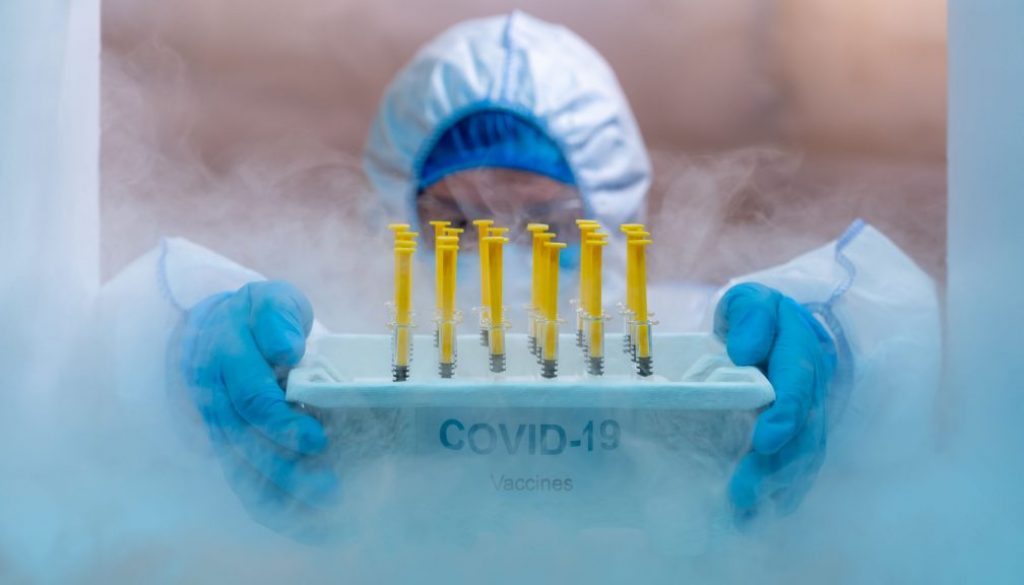
Vaccines: why the cold chain is fundamental?
The cold chain plays a fundamental role in the storage of vaccines developed to combat the Covid-19 pandemic. All the versions created so far require constant storage at temperatures below zero degrees Celsius, while some require storage at so-called ‘ultra-low’ temperatures.
The main problem consists of maintaining adequate temperatures during transportation and haulage firms have already voiced their concerns, warning that distributing vaccines to 7 billion people worldwide will be no easy task.
The main obstacles to maintaining the cold chain
From a logistical point of view, it is those vaccines which can be stored at just a few degrees below zero which are easiest to distribute. The pharmaceutical companies who have been successful in making this a feature of their product are still in the production phase of their vaccines and it will be some time before these vaccines are commercially available in significant numbers.
The urgency to begin a global immunisation program has led to the decision that even vaccines requiring storage at -80 degrees Celsius are to be used, however, sourcing means of transport equipped with such powerful freezers is anything but straightforward (even wealthy nations are having difficulty finding suitable transportation; developing countries risk not having any at all).
Transport by sea can also be excluded (as it would be too slow and unreliable), so vehicles fitted with special refrigerators are being developed so that the vaccine can be distributed all over the world as quickly as possible. Some companies are building warehouses for vaccine storage, equipped with solar panels to provide adequate refrigeration.
Despite this, the problem has only been partially solved, because once the vaccine reaches its destination, it must be distributed across the local area using lorries and vans prepared on an ad hoc basis. Maintaining the cold chain during this phase is as crucial as it is complex.
Another factor to be considered is the geopolitical status of some countries, where the geographical features and government instability render vaccine distribution fraught with difficulties. This is when cooperation between nations proves essential, as in the organisation of humanitarian corridors in war zones, to permit the safe distribution of the vaccine.
Why different vaccines require such different temperatures
Developing a cure for Covid-10 in such a short space of time is no easy task and pharmaceutical companies have invested every resource at their disposal in order to provide an efficient solution to the problem as soon as possible. In order to understand how crucial the cold chain is and why storage temperatures vary so greatly, we will take a closer look at the vaccine creation process.
All the vaccines produced so far are based on mRNA (messenger RNA) technology. This compound features special enzymes which create a chain of chemical reactions, causing a high level of instability. This makes the vaccine break down very quickly and storage at extremely low temperatures is the only way to slow that process down.
Some laboratories have been successful in grouping the vaccine molecules together in nanoparticles, providing the compound with better structural stability. This has the advantage of permitting a higher storage temperature, raising it from around -80° C in the early versions, to a level of between -2 and -8° C.
Beating the global pandemic will take time and collaboration, but things are moving in the right direction. Despite numerous difficulties, the first doses have been administered and the vaccination program is now proceeding at a steady pace.
Translated by Joanne Beckwith