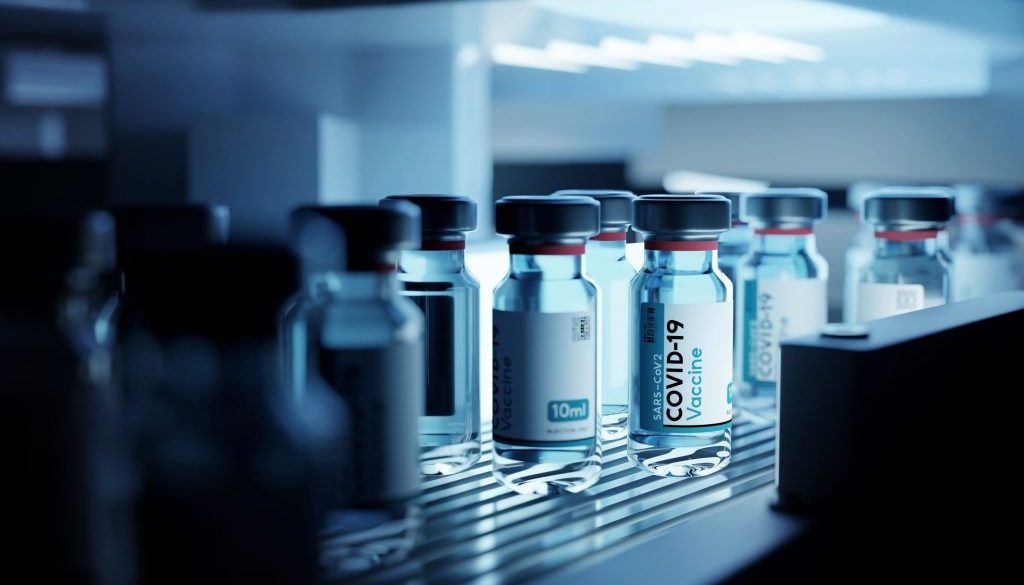
Medicines and vaccines – Why refrigeration is essential and which regulations govern it
The refrigeration of medicines is a process which relies on the cold chain to enable long-term storage, thereby guaranteeing that medicines retain their pharmacological properties until the moment of use.
This theme has been cast into the spotlight in recent months thanks to the Covid-19 vaccine campaigns. Some vaccines require storage at constant low temperatures, sometimes below -80 °C.
The cold chain and the refrigeration of medicines
The cold chain plays a key role in the production, distribution and storage of pharmaceuticals. If the required storage conditions are not closely respected, medicines can lose their efficacy or even become toxic.
It is important to understand why the supply chain is so crucial, what kind of issues manufacturers must face and which technologies make the whole process possible.
With reference to the example of coronavirus vaccines (the rules cited here apply to all products which must be kept at a controlled temperature), there are two main issues which must be resolved:
- Creating an environment with a constant temperature of – 80°C;
- Maintaining that temperature constant throughout the cold chain.
Certain technologies which achieve these two objectives for the refrigeration of medicines have existed for several years and are used in industry as well as in the food sector. A good example is the refrigeration of red tuna, which must be stored at -70°C in order to preserve its delicate organoleptic properties.
Techniques used to maintain the correct temperature
The challenge posed during the refrigeration of medicines is a tough one and requires care, competence and adequate methods. In the case of anti Covid-19 vaccines for example, various storage techniques are used according to the different phases of processing.
During logistical operations, dry ice is used while transporting the vaccines by air, as its low weight and relatively low cost make it the most efficient option. However, this refrigerant needs to be replaced frequently, to counteract the danger of solidification.
When transport over land is required, refrigeration cabinets or ultra-freezers, designed to be fitted onto specially built lorries, are used. Thanks to their different format (which helps to prolong the vaccine’s lifespan to six months), they are the most efficient storage method.
There are also smaller sized refrigeration cabinets, used for short journeys (local distribution and delivery) which guarantee the continuity of the cold chain until the vaccine reaches its destination, whether that is a health authority warehouse, care home or hospital etc.
Regulations governing the refrigeration of medicines
In order to guarantee the correct storage of pharmaceuticals there are two important regulations:
- The first is part of the EU guideline “CPMP/QWP609/96”, known in Italy as Directive 28-6-2001 ‘Guidelines on instructions regarding storage conditions for medicinal products’ and sets out that all storage and transportation methods must be clearly indicated on the product label, with particular attention given to the optimal storage temperature;
- The second is directly addressed to pharmacies and other healthcare organisations, which are obliged to follow the HACCP method (EU Directive CE 852/2004 and Legislative Decree 193/07) for the storage of medicines. Suitable storage environments must be provided, able to guarantee safe conditions, with variations in temperature of no more than 1 °C above or below those indicated by the product manufacturer.
If this important legislation is respected and suitable high quality storage equipment is used, the correct refrigeration of medicines is assured right up until the moment of use.
Translated by Joanne Beckwith