A Coil in HVAC: what it is and why it counts in air conditioning
In the HVAC sector, understanding the individual components is essential in the design of efficient, reliable systems. One lesser known component is the A Coil: a crucial element in modern split systems.
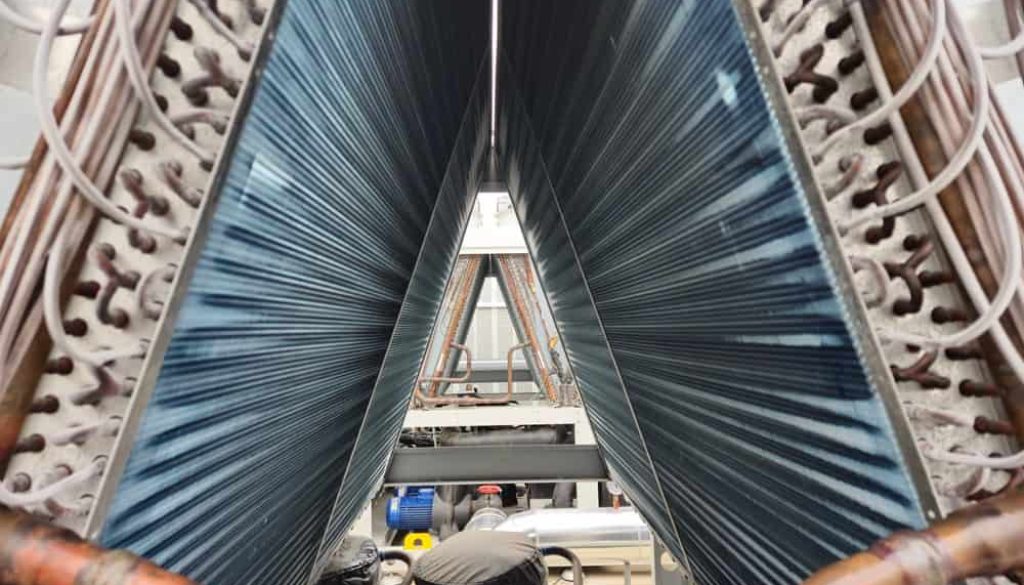
It is an evaporating coil installed in the internal unit and is responsible for thermal exchange, allowing the system to cool the air in a room. It operates according to the physical principle of refrigerant evaporation.
As the fluid passes through the finned battery, it absorbs heat from the air passing through the ventilation system, lowering the temperature. This process forms the basis of centralised air conditioning.
Functioning of the evaporating coil and thermal exchange
In a direct expansion system, the above-mentioned coil is positioned close to the flow of air generated by the internal system fan. The hot air is drawn inside via the cold surfaces of the battery and is re-released into the atmosphere in a better thermal state.
At the same time, humidity present in the air condenses onto the cold surface, making conditions in the room more comfortable. This is why A Coil is not just an accessory but rather a key component, determining system performance and efficiency, as well as air quality.
To understand how it works in more detail, it is important to understand that the whole system is based on a precise, continuous thermodynamic cycle. Following on from the points mentioned above, it is apparent that during the cooling phase, the refrigerant circulates inside the metal tubes, absorbing thermal energy from the air as it passes through the fins. The change in state from liquid to gas enables:
- large quantities of heat to be captured;
- and the gradual lowering of the temperature of the conditioned air before it is distributed via the ducts.
As mentioned above, another essential aspect regards dehumidification. When the battery surface temperature falls below certain thermal values, water vapour present in the air is transformed into condensation. This water is collectd and drained, improving user comfort, especially during the summer months. The ability to simultaneously control temperature and humidity represents one of the main advantages of modern systems.
Overall performance largely depends on the state of the coil: a clean, well-maintained surface encourages more efficient heat exchange, while dirt and other obstructions reduce the system’s capacity considerably. Air flow also plays a determining role, as irregular distribution can compromise cooling efficiency and lead to increased energy consumption.
Integration of boilers and heat pumps in modern A Coil systems
The integration of heating and cooling is one of the most advanced features of residential air conditioning systems. In hybrid systems with a heat pump and a gas boiler, A Coil also plays a central role in the heating phase. In that type of configuration, the same internal battery is used both for cooling and distributing heat in the building.
During operation in heat pump mode, the cycle is inverted. Heat present in the external air is transferred to the inside and released through the coil. This allows efficient heating in milder mid-season conditions, reducing the need to activate the boiler. When external temperatures become too harsh, the system automatically switches to combustion heating, so as to ensure continuity and thermal stability.
This logic of hybrid functioning improves the system’s flexibility and enables more intelligent energy consumption management. The system itself selects the most suitable heat source according to the weather conditions, optimising costs and performance without any manual intervention by the user.
Efficiency, installation and advantages during actual usage
In terms of usage, an HVAC system’s efficiency also depends on its ease of installation and adaptability to real life situations. In residential and commercial projects, space available may be limited, while configurations tend to vary considerably from one building to another. As a result, the compatibility of internal units and air distribution components becomes a decisive factor.
Modern solutions increasingly focus on modular systems, reducing the need for modifications to buildings during construction and simplifying installation procedures. A well designed system enables the use of the same air flow for both heating and cooling, improving overall efficiency and reducing the space needed for the units.
Furthermore, the use of advanced materials such as aluminium in heat exchangers helps to improve resistance to corrosion, thereby extending their lifespan. Compatibility with new generation refrigerants such as R32 is also a strategic factor, in line with environmental regulations and the growing focus on sustainable energy.
Modern solutions and the long term value of A Coil
Currently, the HVAC sector’s most advanced solutions focus on flexibility, duration and integration with other technologies. A Coil plays a strategic role in this scenario, not only as a technical component, but also as an element capable of influencing the entire system’s equilibrium. Its capacity to adapt to different types of external units (inverter or traditional) makes it the most versatile system and suitable for use in a wide range of contexts.
Another relevant aspect involves logistics and the management of largescale projects. Compact, optimised buidings enable transport volumes to be reduced and storage to be facilitated, improving the overall efficiency of the distribution network. This translates into tangible advantages for fitters and distributors, who are able to manage materials and delivery times more easily.
In the long term, high quality construction and compatability with different technologies determine the sustainability of the investment. A system designed with attention to technical detail offers a more stable performance, lower maintenance costs and greater operational reliability. For this reason, the crucial choice of internal components should never be underestimated, as it directly influences the quality of the entire HVAC system.