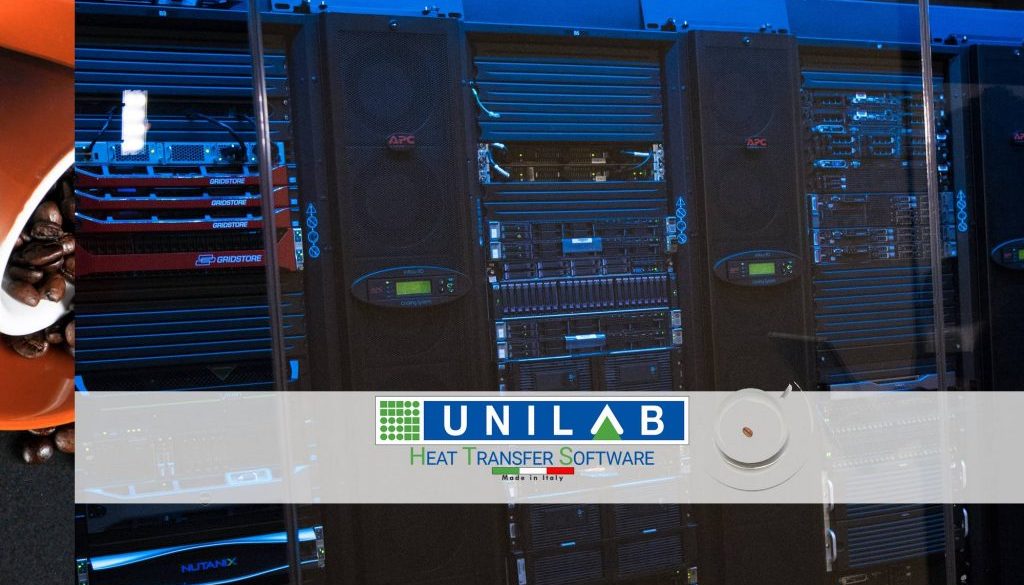
Data Centres: criteria for selection and location
Nowadays, it is extremely important to have a clear idea of the essential criteria when choosing a Data Centre. In order to identify the solution which best fits your needs, you should remember that a good data centre must conform to strict parameters, both from a location point of view and concerning technological characteristics.
A reliable Data Centre should be located above sea level, or at least in an area at low risk of flooding. When considering location however, the particular country must also be taken into account.
Not all alternatives involve the same cost levels. By opting for a Data Centre located in a developing country, it is possible to make savings thanks to lower labour costs, as well as reduced rent charges.
In any case, the decision requires careful consideration, as it involves a part of the infrastructure which can have a decisive impact on the security of company data and therefore on the business itself. So it is fundamental to keep a balance between value for money and performance, while bearing in mind the political stability of the chosen nation. Should such problems arise, it could become necessary to transfer the data centre elsewhere at short notice.
It is also important to consider current local privacy legislation and the efficiency of that country’s judicial system.
Another essential point is the doubled up cooling system. In fact, every single part of the Data Centre must be doubled up. That way, potential service failure can be avoided, should the conditioner be turned off.
Another important factor to consider is the presence of a separate battery powered system. This makes it possible to run servers on different power supplies and on two different circuits. It should also be noted that electricity generators which can be up and running within a short space of time will also be required and must be subjected to regular maintenance.
Other selection criteria
Another feature on the list in the search for a perfect Data Centre is the dust removal system. It is an essential tool, which allows maintenance problems to be kept to a minimum, thereby avoiding the disruption of having to turn the servers off for cleaning and then back on.
The Data Centre must also be adequately protected. It is therefore important to install cameras at the entrance and to enforce strict rules to limit access to unauthorised personnel. Inside a secure Data Centre, cupboards and units must be locked or secured via a combination code. It is also essential to clarify acceptable hardware parameters.
Also on the list of points to consider during the selection phase is primary and redundant connectivity. With this point, we return to the choice of location, with the emphasis on how important it is to find out about the reliability of telecommunication networks in a particular country.
It is also very useful to have the option to access DNS services. These should be located in different premises from the Data Centre, thereby guaranteeing continuity even in case of serious issues.
It is strongly recommended that repair times are checked carefully. Reference is often made to a period of 24 hours, but do not be fooled by this. It actually refers to 24 working hours, in other words a total of 3 days before a technical problem is resolved.
With these time periods, everything depends on the situation of the individual firm, which must assess whether a 3 day stoppage is acceptable in the case of technical issues affecting the Data Centre.
Not to be overlooked during Data Centre selection is the solid reputation of the provider company. It is advisable to deal with a company which has plenty of experience and in particular, which is able to offer an efficient regular maintenance service (crucial if you want to be competitive as a supplier of digital services).
Translated by Joanne Beckwith