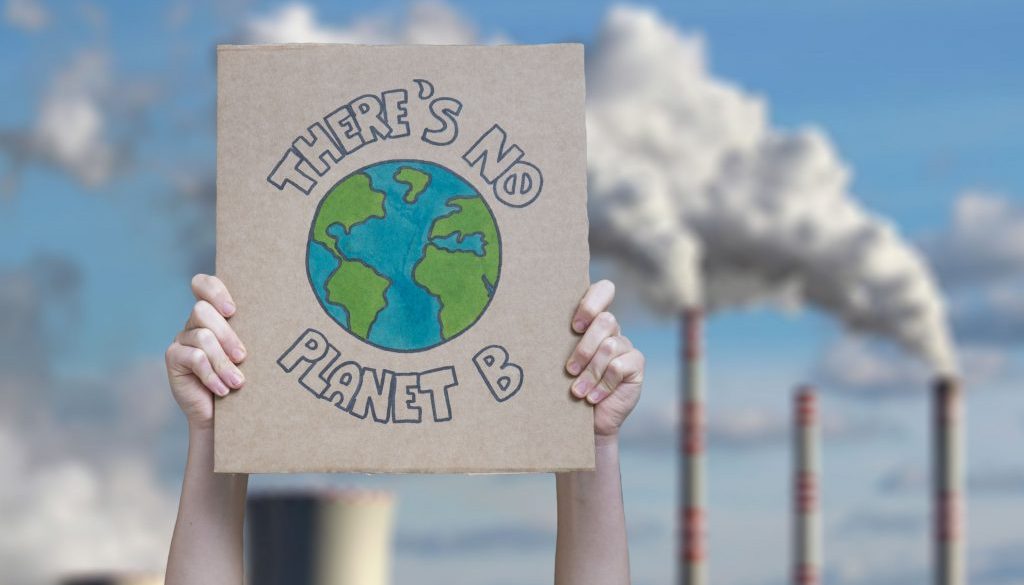
Global warming: temperatures rising, despite lockdown
The Global warming emergency has been brought to our attention repeatedly by scientists and climatologists. The alarm regarding issues linked to rising global temperatures has been around for many years, just like the plan of action which, nevertheless, no nation has actually enforced.
The current situation is now more critical than ever and humanity is getting dangerously close to the point of no return. It will soon be too late to make amends or change direction and, according to the latest available data, the increase in average global temperature could exceed the +1.5°C limit much sooner than expected.
Lockdown has not made a sufficient impact on global warming
During the first months of lockdown imposed to counteract the worldwide Covid-19 pandemic, some positive data encouraged hopes that 2020 might mark a turning point in the battle against global warming.
Hope soon faded however, because although the almost complete halt in CO2 emissions did lead to a slight drop in global temperatures, the progress made was not enough to make a significant difference.
More recent data from the January to October period, indicate that 2020 was an extremely warm year, second only to 2016. These calculations are of course still unofficial, as the official statistics are not released until next March, however they do not augur well.
The Paris climate agreement objectives on reducing pollution have not been achieved and the target of bringing the rate of global warming below the +1°C level by 2030 seems unlikely to be reached by then. In fact, the data indicates that there is a 20% chance that global temperature will rise by more than +1.5°C by the year 2024.
Is Earth destined to change beyond recognition?
The warnings of scientists and climatologists are not intended to cause alarm, but rather to increase awareness that if we continue along our current path, planet earth is at risk of undergoing such drastic changes as to become unrecognisable.
The effects of global warming are being witnessed in many countries. Extreme weather phenomena have become increasingly frequent in the last 6 years, which have been the hottest since the recording of temperatures began in the nineteenth century.
If the world continues on its current route, characterised by government denial and inaction, the climate problem will soon become irreversible. The Arctic glaciers will continue to melt at an astonishing rate, causing a devastating chain reaction, with increasingly violent storms and a rise in sea levels.
This will lead to floods in many coastal areas, devastating damage to harvests, starvation and wars for the control of the last remaining resources; a genuine apocalyptic scenario, which, unfortunately, the planet is hurtling towards.
Despite the tragic prospects described above, humanity still has some hope of resolving or at least improving the situation. In order to do that however, we must act immediately, by formulating new agreements, imposing adequate counter-measures and dramatically reducing the use of fossil fuels.
Lockdown has certainly shown how shared initiatives can provide results in the short term, but without long term conviction and consistency, efforts are doomed to fail.
Translated by Joanne Beckwith