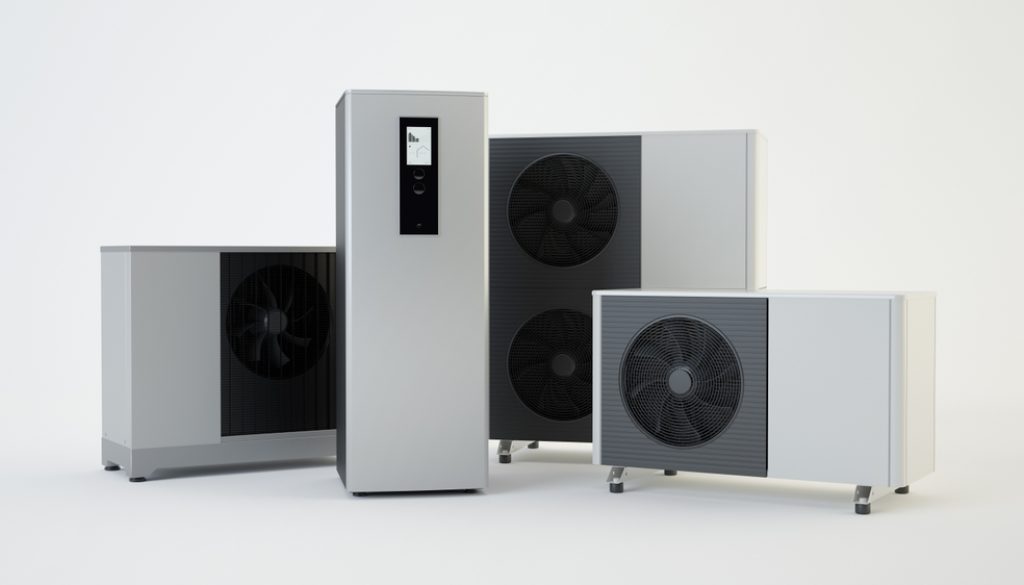
High temperature heat pumps: technologies, challenges and prospects for European industry
High Temperature Heat Pumps (HTHP) are a key technological innovation, able to generate heat and produce temperatures of up to 200°C, thanks to their use of electricity and recovered latent heat. This characteristic makes them highly suitable for use in industrial processes involving chemicals, food products, pharmaceuticals and paper processing.
The industrial sector is in fact among the biggest energy consumers at global level, with the medium to high temperatures required for many of its processes often still achieved using fossil fuels. Decarbonisation of this sector is therefore crucial to meeting established European climate targets by the years 2030 and 2050.
Up until a few years ago, heat pumps were mainly used for civil purposes and usually in processes carried out at low temperatures. Today, rapid technological advances are underway which could open up new opportunities for the sustainable production of industrial heat.
Operating principle and applications of high temperature heat pumps
The principle at the base of HTHPs is the same as in standard heat pumps: a thermodynamic cycle that transfers thermal energy from a lower temperature source to a higher temperature process fluid, by means of a refrigerant and an electrically operated compressor.
The main difference can be seen when the devices are used in more demanding operational conditions, which oblige the use of specific refrigerants (able to resist elevated temperatures and pressure levels without being compromised) and components designed to work efficiently even when subject to intense thermal cycles.
In some cases, multi stage or hybrid cycle architectures are used to reach significantly high temperatures, as they combine mechanical compression with thermochemical transformation. These solutions open the way to the flexible use of HTHPs in processes which were not previously considered suitable for electrification.
These characteristics enable these devices to be used in a wide variety of manufacturing sectors. In the paper industry for example, paper drying requires huge amounts of steam at temperatures of between 120°C and 180°C. The adoption of heat pumps helps to significantly reduce the use of gas boilers, bringing both financial and environmental benefits.
The chemical and pharmaceutical industries can also benefit from HTHPs, as many evaporation and distillation processes are carried out at temperatures ranging from 100°C to 160°C. In the food sector, milk pasteurisation, sugar production and the processing of fruit juice concentrates and their derivatives also require medium-high temperatures, which are often provided by traditional boilers. Finally, in the steel industry and in surface treatments, these devices can be used to heat tanks for washing and pre-treatment or during the preheating phase at low or medium temperatures.
This range of use is made possible not only by their ability to produce heat at elevated temperatures but also thanks to the opportunity to recover and make use of latent heat generated in factories, thereby closing energy cycles and reducing total primary energy requirements.
European projects and case studies
In order to accelerate the adoption of industrial heat pumps, the European Union has launched several research and demonstration initiatives. The most significant include the Push2Heat and SPIRIT projects, financed by the Horizon Europe programme.
The former explores different technologies via demonstration sites, ranging from the steam compression cycle used at a German paper production plant to the use of thermochemical transformers in processes in the Belgian chemical sector.
The latter focuses on the development of heat pumps capable of producing temperatures of up to 160°C to satisfy industrial requirements by 2030, with demonstrations in real-life contexts such as the Belgian sugar refinery Tiense Suikerraffinaderij.
As well as technological value, the projects mentioned above also have cultural significance; they provide tangible evidence that the replacement of traditional systems with HTHPs is possible, cost-effective and replicable, reducing uncertainty and building trust among industrial operators.
Barriers and opportunities according to the PESTEL analysis
A study conducted in various European countries has shown some strengths and weaknesses via the use of the PESTEL model, which takes into account political, economical, social, technical, environmental and legal factors.
At a policital level, the absence of a unified strategy and the lack of heat pump visibility as part of national decarbonisation policies is slowing uptake. The financial aspect is probably the biggest hurdle as initial costs are high and electricity prices are often unfavourable when compared to gas. From a sociological point of view, a certain cultural resistance has emerged, with limited public awareness of the potential of this kind of technology.
The technical challenges regard the shortage of specialised workers, the difficulty of integrating these devices into existing systems and their compatibility with steam distribution networks. There are also some legislative uncertainties associated with the use of refrigerants and the classification of latent heat, making investment planning complicated.
Apart from the issues, there are also plenty of opportunities. Political support is growing, with targeted finance mechanisms and a legislative framework being developed. The technologies involved are reaching commercial maturity, with some systems already available on the market. Furthermore, innovative business models are becoming established, such as Heat-as-a-Service, which allows companies to purchase heat as a service without having to sustain investment costs directly.
European policies and incentives
The European Union is gradually introducing high temperature heat pumps in their decarbonisation strategies. The Clean Industrial Deal, for example, promotes the electrification of industrial processes and the use of latent heat. Schemes like the Innovation Fund Auction for Industrial Process Heat and new legislation on State funding explicitly recognise the role of HTHPs and incorporate specific incentives.
Through these measures, a scenario is being created in which the adoption of electified technologies does not penalise companies, rather it becomes an opportunity to improve competitivity, reduce costs in the long term and liberating businesses from the volatilities of the fossil fuel markets.
High temperature heat pumps are now a mature technology, capable of gradually replacing fossil fuel boilers in the most common industrial processes. Thanks to political support, active case studies and technical progress, HTHPs are currently entering a phase of transferral from workshop to market.
Translated by Joanne Beckwith