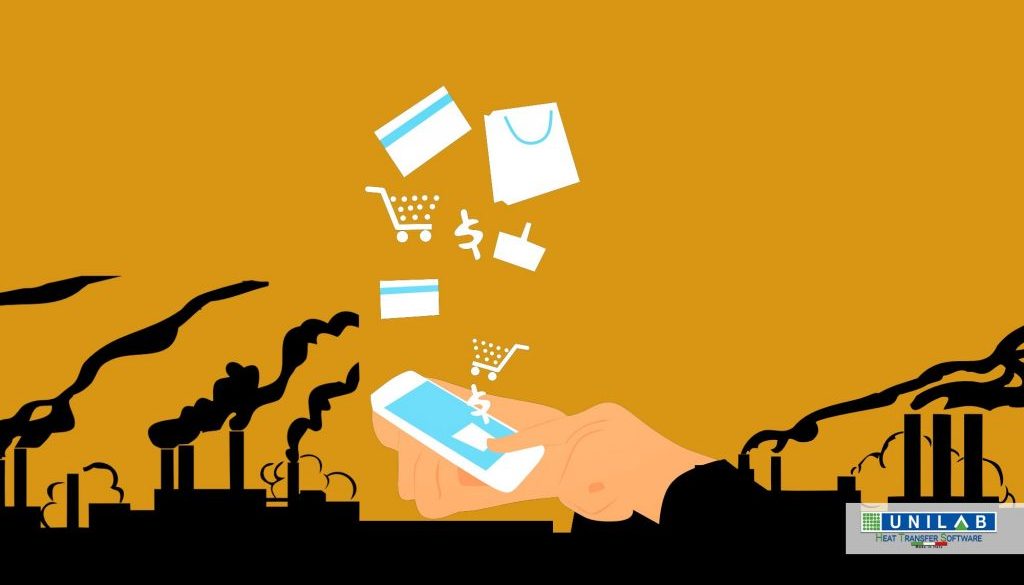
Online shopping causes more pollution than you might think
Without a doubt, shopping online can be extremely convenient. Receiving a parcel within a few days (if not the next day) has become the norm, but it is important to take into consideration the consequences of all this on the environment.
While purchasing online means that millions of people no longer need to physically travel to the shops (resulting in a reduced environmental impact in terms of transport), the pollution produced by the new (ever faster) methods of delivery should not be underestimated.
Online shopping requires massive use of vehicles
Clients who use e-commerce to make online purchases from the comfort of their sofa do not necessarily stop to think about how the product will reach their home. Lorries, vans and other industrial vehicles that run exclusively on roads, cover enormous distances each day.
The demand for ever increasing speeds of delivery has led to the need to increase the use of such means of transport, which are quicker and better able to offer complete coverage of the territory.
However, CO2 emissions are reaching unsustainable levels, risking grave consequences if the balance is not re-addressed soon. The data is clear: since 2006, when the number of vehicles on the roads was 250 million, the number has risen considerably, reaching 330 million in 2014 and is estimated to exceed 462 million vehicles by the year 2050.
Plastic and cardboard play are a key part of online shopping
Another important factor which contributes to the pollution caused by online shopping is the largescale use of plastic and cardboard in product packaging.
When a purchase takes place in a traditional shop, one plastic bag is normally used at most (with biodegradable bags becoming more and more common), but for online purchases, suitable packaging is of paramount importance. Plastic is often used to make sure the parcel is waterproof, not to mention extra packaging to protect against bumps and breakages (also made of plastic), as well as the final, outer layer of cardboard.
In order to get a clearer picture of the consequences on the environment, consider that 15% of the plastic produced worldwide ends up in the packaging of products purchased online. This means an increase of approximately 200% in less than ten years.
Possible solutions to reduce pollution caused by online shopping
Some companies, who are more sensitive to the environmental issues linked to online shopping are studying new solutions to reduce its impact.
The first relates to the use of completely electric vehicles for the transport of goods. With the creation of the right infrastructures at crucial points where the quantity of goods transported is greatest, it will be possible to reduce CO2 emissions drastically. With the careful planning of journeys and routes, it will be possible to reduce working hours by as much as 60% and delivery costs by 35%.
The second solution (already being trialled in some German cities) involves the use of Boxes for product delivery. This means that instead of delivering the goods to the client’s house, the courier will deliver the products to special safety deposit boxes, located in strategic locations such as supermarkets or shopping centres (as near as possible to the client’s home).
The goods can be retrieved 24 hours a day, 7 days a week, thanks to a unique un-blocking code. The only obstacle, at present, is convincing clients to give up the convenience of receiving their orders directly at home.
In the United States, some large online retailers are also trialling delivery via drone. These little devices currently have a maximum load capacity of 8kg and a rather limited delivery range. In addition, allowances must be made for unfavourable weather conditions. Within a few years, thanks to technological advances, this solution could turn out to be an ecological alternative to delivery by road.
Translated by Joanne Beckwith