Smartphone payments: what are the current limits?
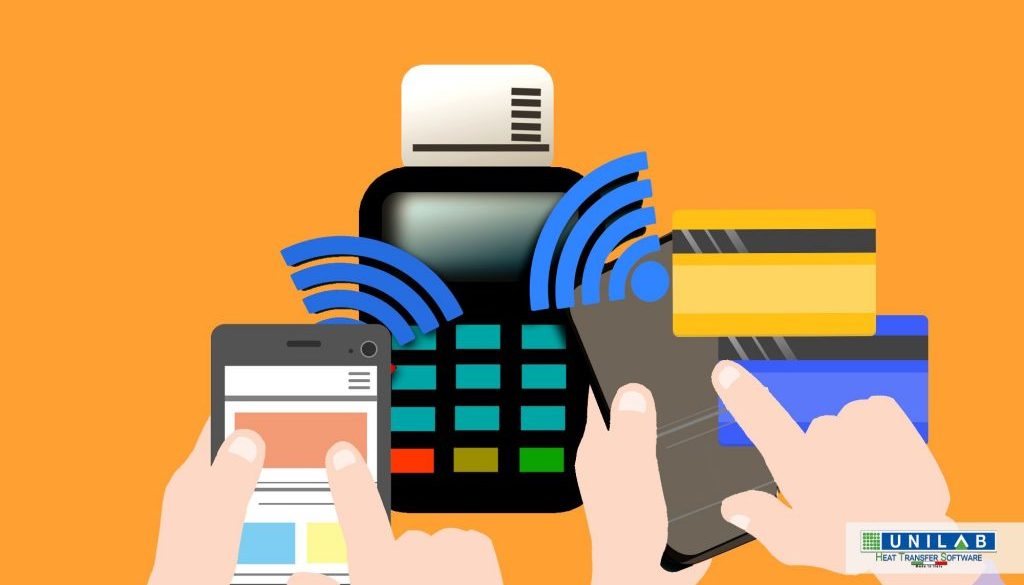
Thanks to NFC technology, Smartphone payments have been a part of many people’s daily lives for some time. Our smartphones can be used like virtual wallets. All you have to do is swipe your phone across the screen of a POS contactless reader to make payments: no need to even take your credit card out of your wallet.
Although this innovation is very positive, there are some important points to bear in mind, including the additional costs. Before exploring this situation in more detail, let us take a look at the mechanism involved, which is in fact extremely simple. Inside smartphones, connected to electronic payment methods such as credit or pre-paid cards, there is a SIM which, when held within 4 centimetres of a POS, enables immediate payments to be made using a special app.
Risks and limits
Smartphone payments are certainly very convenient, but users should be aware of certain risks and limits. The first of these relates to the fact that, for payments involving amounts under 25 euros, no PIN is required.
This could be very risky if the phone is stolen or targeted by criminals equipped with devices that can be used in close proximity to activate a smartphone’s NFC technology, such as on public transport or in the street, in order to steal money. It is no coincidence that special wallets and briefcases featuring a special lining designed to shield contactless cards and smartphones with NFC technology from criminal activity of this kind have been on the market for some time.
Another limit regards the fact that app payments do not allow young people who are still under-age to access their money. Despite savings accounts and other financial services for young people being widely available, authorisation from a parent or guardian is still required before a person under a certain age can use pre-paid cards. Without any authenticated source of income, it is in fact impossible or very difficult to obtain a credit card. In view of this situation, new legislation is required in order to lower the minimum age at which users can access online payment services.
Another important point to remember relates the costs payable by traditional shop owners, who might not have a POS (even though they are now legally required to do so in Italy) so as to avoid paying the commission due on credit card payments.
The advantages of payment via smartphone
At the current time, it is difficult to ascertain for sure who will make money out of app payments. NFC technology has some objective limits, as mentioned above, but also many advantages which should be highlighted. First of all, there is the question of financial advantages for banks. It is these financial organisations who issue credit cards and pre-paid cards.
Supporters of smartphone payments also highlight the fact that they could be useful in cutting tax evasion. The impact of this social problem is well-documented, but it is also true that those who routinely dodge taxes, will continue even with electronic payments. How? They will do this using Bitcoins and other cryptocurrencies, which can be used in place of cash. Criminal elements needing to launder cash obtained through illicit activity or to evade paying tax, will be able to do this by inventing a new digital currency or making use of one of the existing cryptocurrencies.
Although the Central European Bank stopped issuing 500 Euro notes in January this year, a final farewell to cash is still a long way off, even if only because organised crime groups are highly skilled at adapting to change and are able to exploit those very app payments originally designed to counteract illegality.
Translated by Joanne Beckwith