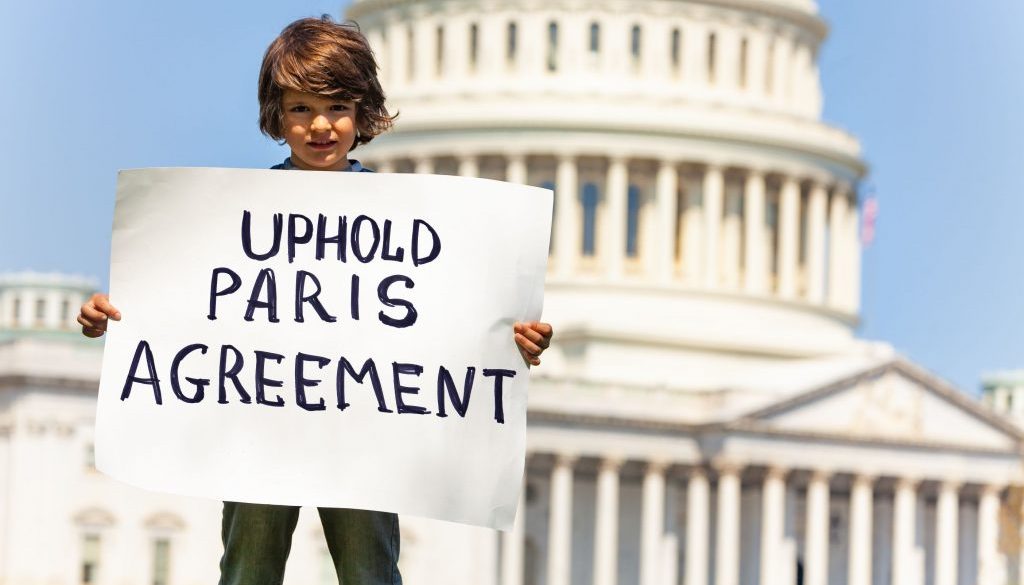
USA and Paris: how much can emissions be reduced?
In the last few years, the relationship between the USA and the Paris Agreement on Climate Change has been somewhat stormy. The Trump administration actually dissociated itself from the well-known climate agreement, while allowing emission levels in the United States to reach worrying levels.
Following his recent election, the incumbent President Joe Biden has declared his firm intention to return his nation to the heart of pollution-related matters.
The idea he has expressed is to try to reach the objectives set out in the Paris agreement by the year 2030 at the latest. Biden presented the various measures he plans to introduce at his virtual climate summit on April 22nd -23rd which was attended by 40 world leaders.
USA – Paris: expert analysis
According to analysts, the current climate situation will require considerable effort on the part of the USA in order to reduce the level of global warming and maintain it below 1.5°C compared to pre-industrial levels, which is the figure set out in the Paris agreement, aimed at fighting ongoing climate change efficiently.
More specifically, estimates mention a reduction in the level of emissions produced in 2005 of between 57% and 63%. This figure includes the so-called LULUCF emissions, which are those generated from the land use, land use change and forestry.
If LULUCF emissions were excluded, the percentage would fall to 55% but, in light of the expected difficulties, the European Union would be satisfied with an overall reduction of 50%.
Biden’s transition plans
If the objectives of the USA-Paris agreement are to be reached, the States must develop carefully targeted and well thought-out strategies. As planned, the Biden administration held a virtual summit in Washington on 22nd April, where the government presented the action plan it intends to implement in order to cut emissions.
One of the key points in the program regards the decarbonisation of the three sectors which contribute to pollution the most: electricity generation, transport and air conditioning in buildings, especially commercial ones.
According to initial analyses of the plans drawn up by the US President, experts agree with the measures introduced for the electricity sector, but oppose those involving other fields.
In order to achieve sustainable transport, significantly more drastic reductions would be required compared to those planned. It is estimated that, in order to comply with the Paris agreement by 2030, at least 95%-100% of the total number of light vehicles sold across the entire nation would need to be zero emission, as is already happening in California.
The reduction of the carbon footprint of air conditioning systems in buildings constitutes a real challenge for Biden. Although the objective proposed during the summit includes a reduction in emissions of 50%, according to experts, the reduction should be at least:
- 60% for residential buildings;
- 70% for commercial buildings.
The positive effects of the United States’ renewed commitment
Although there are still some creases to be ironed out, the United States’ return to the Paris agreement gives a very positive signal. The USA is in fact the nation with the greatest influence on global warming and the fact that they have decided to take such drastic action to counteract it will have a beneficial effect not only on the climate but also politically.
The USA’s commitment towards the Paris agreement and its treaties could in fact persuade other more reluctant nations to follow suit and embrace a zero impact philosophy. In order to find out how the situation develops from here, all that remains is to wait and hope that the Biden administration keeps its promises.
Translated by Joanne Beckwith