AccelerateEU: Europe’s response to the energy crisis
AccelerateEU, the European Union’s strategic energy plan, aims to protect families and companies from increases in energy prices and, at the same time, speed up the transition towards a system based on clean, internally produced energy.
In the last few years, Europe has undoubtedly had to face what can only be defined as one of the most complex energy transformations in recent history.
Following the pandemic and increased geopolitical tensions linked to the war in Ukraine, renewed conflict in the Middle East has placed international energy markets under further pressure, highlighting the fragility of Europe’s dependence on imported fossil fuels once more.
The five cornerstones of the European energy strategy
This strategy constitutes much more than a simple emergency measure. Brussels defines it as a genuine ‘toolbox’, combining the use of immediate measures with long term strategies. Its dual objectives are to reduce the effects of the current crisis and build a more resilient European energy system which is less exposed to international tensions and based more on renewable sources, electrification and modern infrastructure.
The urgent need for action is also backed up by statistics. Since the beginning of the escalation in the Middle East, the EU has sustained around 24 billion euros of extra costs in energy imports, without obtaining any real increase in supply. This situation underlines how the volatility of the oil and gas markets can have direct consequences on the European economy, family budgets and company competitivity.
The European community plan Accelerate EU is therefore based on five major operational cornerstones, aimed at strengthening coordination between member states and speeding up the journey towards energy independence:
- the first of these cornerstones regards strengthening European cooperation. A Fuel Observatory will be set up to monitor fuel production, reserves, imports and exports. Its purpose is to identify any shortages quickly and intervene promptly to ensure balanced distribution of energy resources between member states. In an unstable international scenario, the ability to coordinate strategic reserves becomes a crucial element in order to avoid unxpected price shocks;
- the second key step aims to protect citizens and industry. European institutions intend to introduce temporary schemes aimed at supporting the most vulnerable groups and those manufacturing sectors most exposed to increases in energy costs. Planned measures include energy vouchers, income support schemes, reductions in electricity taxes and social leasing programmes for high efficiency technologies. The European Commission will also be working on a temporary framework of state aid which will allow national governments to intervene with greater flexibility. Special focus is to be placed on energy taxation. Currently, electricity costs and taxes account for around a quarter of European domestic bills. Reducing this tax burden is considered essential to make electrification more advantageous compared to fossil fuels;
- the third cornerstone relates to electrification itself, viewed as one of the most efficient methods of reducing dependence on externally supplied energy. The Commission will present a dedicated Plan of Action outlining measures aimed at the industrial, construction and transport sectors. The target is to remove bureaucratic, financial and infrastructural obstacles which continue to hamper the take-up of electricity-based technologies;
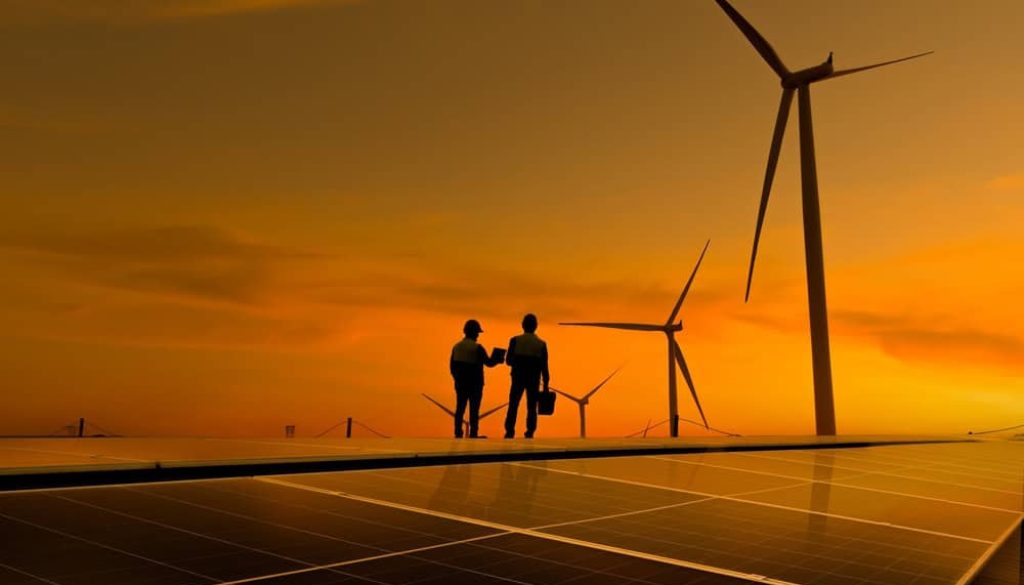
- considering that an energy transition based on electrification requires an adequate infrastructure, the fourth cornerstone of the European plan focuses on upgrading energy networks. Without modern, flexible and interconnected distribution systems, increased energy production from renewable sources would risk causing inefficiencies and imbalances. The European Union aims to accelerate the approval of the European Grids Package: the regulatory package designed to modernise continental electricity networks. At the same time, new regulations on network tariffs and energy taxation will be introduced, with the aim of encouraging electricity use over fossil fuels. Intelligent networks are one of the most important decarbonisation tools. Thanks to digitalisation, it will be possible to integrate renewable sources like solar and wind power more effectively and manage peaks in demand better, thereby increasing the continent’s overall energy security. The ability to store and distribute energy efficiently will determine the success of Europe’s green transition;
- the fifth key measure involves the mobilisation of public and private investment. A considerable amount of funding is already available at European level; the Recovery and Resilience Facility and cohesion funds have together put around 219 billion euros on the table. Nevertheless, the funds required to achieve the EU’s climate targets by 2030 are estimated at over 660 billion euros per year. In order to bridge that gap, Brussels aims to increase the involvement of private capital, through a new Clean Energy Investment Strategy and a summit dedicated to energy sector investors. The idea is to create favourable conditions to finance infrastructure, technological innovation, energy efficiency and large scale clean energy production.
Heat pumps, renewables and energy independence
One of the most interesting aspects of AccelerateEU regards its strong support for technologies that enable the rapid reduction of natural gas consumption. Among these, heat pumps are undoubedly taking on a central role both in the political debate and as part of industrial strategies.
The European Heat Pump Associateion (EHPA) has welcomed the European plan, emphasising how electrification can become a decisive factor, not only in terms of environmental sustainability, but also for economic competitivity and geopolitical security in Europe. Reducing Europe’s dependence on energy imports means lessening it’s exposure to international crises and stabilising costs for families and businesses.
Heat pumps are considered a strategic solution because they enable electricity to be used extremely efficiently for the heating of buildings. When powered by electricity produced using renewable or nuclear sources, they permit a drastic reduction in emissions and also reduce the need for imported gas.
The industrial sector could also benefit significantly from electrification. Many production processes can in fact be converted to high efficiency electrical technologies, reducing energy consumption and long term operational costs. Such a change would also have positive effects on the competitivity of European firms, especially at a time when they are facing strong international competition.
According to European data, over 70% of electricity produced in the EU already comes from renewable or nuclear sources. This shows that the journey towards a cleaner energy system is already underway, even though a lot of work must still be done in order to complete the transformation of infrastructure and consumption.