Rising memory costs: is it all AI’s fault?
Rising memory costs are becoming one of the most palpable effects of the global race for artificial intelligence. While the expansion of AI supporting data centres absorbs huge quantities of DRAM and NAND flash, producers are focusing a growing proportion of their industrial capacity on more profitable components. The result is a market where memory availability for traditional servers, PCs, notebooks and mobile devices is being reduced while, at the same time, its cost continues to rise.
According to Gartner, global income from memory will reach something like 837 billion dollars in 2026 alone compared to 220 billion dollars in 2025: an almost fourfold increase in the space of just one year. In addition, it is important to note that in the same period, global spending on semiconductors is expected to reach a level of 1,555 billion dollars, which equates to a 92% increase compared to the 809 billion dollars recorded in the previous twelve months.
DRAM and NAND would therefore account for around 54% of global profits from semiconductors, compared to 27% in 2025. This disproportionate figure perfectly highlights the extent to which artificial intelligence is altering the balance throughout the technology industry. Gartner also predicts that profits from memory sales will increase by 280% overall in 2026 and will exceed a thousand billion dollars in 2027, with growth of 247% for DRAM and as much as 372% in the case of NAND.
HBM and data centres: why the demand for memory continues to grow
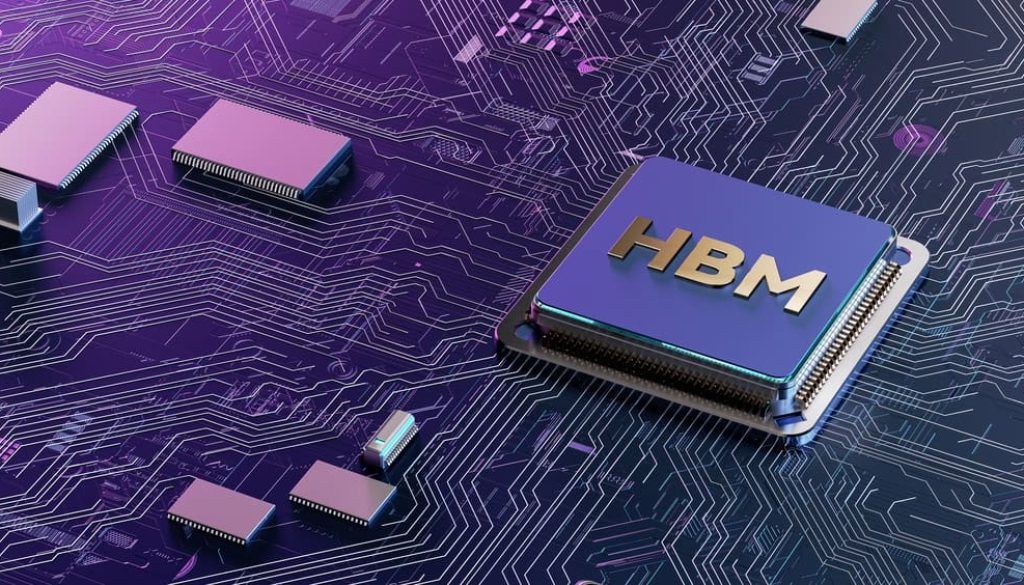
At the centre of this transformation is High Bandwidth Memory (HBM); a technology designed to ensure a vastly superior bandwidth compared to conventional DRAM. Its chips are piled vertically using 3D packaging techniques and connected by Through-Silicon Vias, allowing memory to be positioned very close to processors and GPUs.
This reduction in distances helps to increase the speed of data transfer, while also limiting latency and energy consumption. HBM is now an essential component of accelerators used in artificial intelligence systems, supercomputers and HPC applications.
The growth in demand is not exclusive to high performance memory. The new data centres also require huge quantities of traditional DRAM and NAND flash to power the CPU servers, catalogue datasets, conserve model checkpoints and manage inference loads.
An additional driver is agentic AI, which is introducing artificial intelligence into a growing number of company applications. Its agents must consult databases, carry out simultaneous activities and store models and operational information in memory, increasing the need for general purpose servers as well.
Gartner estimates that in 2026, servers will produce 47% of DRAM profits, while the price of DRAM could increase by 199% within a year. The pressure exerted by AI infrastructure therefore translates into structural demand which involves many more components compared to HBM memory alone.
Production capacity is unable to keep up with demand
Memory price increases are also linked to the problem of production capacity. It is note asy to increase the production of semiconductors rapidly, as building a new factory requires considerable investment, years of planning and construction, as well as a lengthy period needed to get production processes up to speed.
Converting existing plants also brings technical and industrial limitations. At a time of very high margins, producers have a strong incentive to dedicate resources to HBM, DRAM for servers and high capacity SSD enterprises, leaving less space for memory destined for consumer electronics. The consequences:
- directly affect companies that have to purchase servers, storage systems and workstations;
- but could also influence notebook and smartphone markets.
Gartner predicts a 7% shortfall in NAND, accompanied by price increases of 234% in the current year, while he does not foresee any significant improvement in memory availability until at least the second half of 2027, unless there is a considerable slowdown in investment in artificial intelligence.
Forecasts by TrendForce also point to a market under pressure. In the third quarter of 2026, contractual prices for conventional DRAM are expected to rise by 13-18% over the previous quarter, while those of NAND could increase by 10-15 percent.
The rate of increase is lower than that recorded in the previous quarters, but this figure should be interpreted in light of the fact that prices have already reached very high levels and consumer demand is weaker. In the enterprise segment, the limited availability of DRAM destined for controllers continues to condition the production of certain high performance SSDs.
What does this mean for company IT budgets?
In terms of IT planning, the effects of rising memory prices go well beyond the price increase of a single component. A server equipped with a larger amount of RAM can become considerably more expensive, while enterprise SSDs can be more difficult to access and have more unpredictable delivery times.
Even the configuarion of company notebooks can be affected by this increase in costs, especially in the case of models with very large amounts of RAM and high storage capacity. As a result, planning investment in technology becomes much more complex:
- purchasing in advance can bring protection from further increases, but it implies blocking capital and being able to foresee future needs;
- postponing orders, on the other hand, exposes a company to the risk of even higher prices or reduced availability.
Many organisations then, will have to review their procurement strategies and evaluate longer supply contracts, while paying greater attention to demand forecasts and managing the hardware replacement cycle more carefully.
This situation also shows that the economic impact of AI does not only involve CPUs and specialised acccelerators. The more widespread use of intelligent systems is in fact changing the balance between the supply and demand of essential digital infrastructure components.
As long as investment in data centres continue to grow at such a rapid rate, memory will remain a strategic resource and its price a key factor in determining technology budgets.
For companies, monitoring the DRAM and NAND market will no longer be solely linked to purchasing, it will become an integral part of IT planning and the ability to predict the costs of digital innovation.