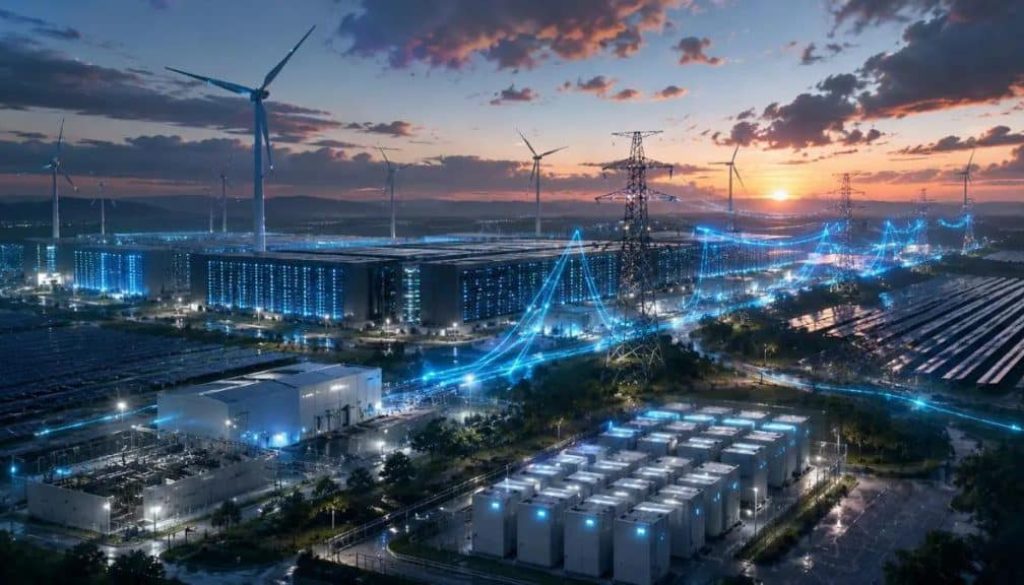
Intelligent energy systems: how AI, digitalisation and storage are transforming the future of energy
The rise of artificial intelligence and digital technologies is radically changing the way in which energy is produced, distributed and consumed. In recent years, Europe has witnessed rapid growth in investment in technological innovation, driven by data centre expansion and increased demand for electricity to power digital services.
According to the latest estimates, data centres account for around 1.5% of global electricity consumption and their energy requirements could be more than double that by 2030. This prospect calls for serious reflection regarding the capacity of energy infrastructures to sustain the ongoing digital transformation.
This scenario has seen the emergence of intelligent energy systems: a new generation of networks and technologies capable of dynamically adapting to match market and user needs. The aim is not only to increase clean energy production, but also to manage available resources more efficiently.
Advanced sensors, real time monitoring platforms, predictive algorithms and automation tools enable consumption to be optimised, waste to be reduced and network stability to be improved. This convergence between energy and digital forms a cornerstone of the European ecological transition, allowing renewable energy sources, with their typically variable production levels, to be used as efficiently as possible.
Artificial intelligence as an engine for energy efficiency
AI is taking on an increasingly central role in the energy infrastructure evolution. Thanks to their ability to process enormous quantities of data in a matter of seconds, smart algorithms can predict peaks in demand, analyse consumer behaviour patterns and suggest more efficient operational strategies. This provides network managers with an opportunity to take quick, accurate decisions, improving the balance between energy production and use.
One of the most promising fields is automated building management. Thanks to advanced control systems, it is possible to regulate heating, cooling, illumination and ventilation according to the occupants’ actual requirements, thereby avoiding waste and reducing costs.
The latest generation of heat pumps is a good example of these advances. When integrated with intelligent software and connected to digital networks, these heat pumps are able to regulate their own operation to fit weather conditions, renewable energy availability and electricity costs.
Predictive maintenance is also revolutionising the sector. Thanks to the continuous analysis of data from the systems, it is possible to identify any anomalies before they become system failures, thereby increasing the infrastructure’s reliability and durability. The result is a more resilient system, able to ensure operational continuity and lower running costs in the long term.
Storage and flexibility: technologies that make the network more stable
The growing use of energy sources like solar and wind power has made the availability of tools that can quickly compensate for any fluctuations in energy production indispensable. As a result, storage is becoming one of the key technologies in the energy transition. As well as electrochemical batteries, thermal energy storage is becoming increasingly important. This solution enables heat or cold to be stored for subsequent use whenever required.
The latest projects financed by the European Union demonstrate how much these expedients can contribute to making the entire energy ecosystem more flexible. Initiatives such as ECHO and BEST-Storage (supported by the Horizon programme), aim to integrate intelligent energy systems with heat pumps, creating an infrastructure which is able to adjust quickly to variations in demand.
Stored thermal energy can be used during peak consumption times or when energy production from renewable sources is lower, thereby reducing the need to use systems powered by fossil fuels. This improves overall network efficiency and contributes to reducing CO₂ emissions. Furthermore, greater operational flexibility facilitates the integration of larger amounts of green energy, helping to reach European climate targets faster.
Latest news from the sector, including cybersecurity, data management and citizen participation
Technological innovation does not only involve systems and physical infrastructure. One of the most relevant aspects to emerge during the BRIDGE Assembly 2026 (an important meeting promoted by the European Commission, bringing together key projects dedvoted to the smart grid and energy innovation) regards data mangement and IT security.
With increased connectivity, the need to protect networks and digital platforms from potential online threats is growing. Cybersecurity, data governancce and system interoperability have become central factors in ensuring the reliability and continuity of energy services. The new infrastructures must be able to communicate with each other efficiently and share information in real time, without compromising the security of sensitive data.
At the same time, the role of consumers is becoming more incisive. Modern digital platforms allow citizens to monitor their own consumption, take part in local energy markets and contribute actively to managing demand. The growing number of renewable energy communities offers one of the most significant examples of this change. Through the use of collaborative models, families, businesses and local organisations can share locally produced energy, encouraging greater energy independence and a more efficient distribution of resources.
Towards a more sustainable, intelligent, connected energy ecosystem
The future of energy will be increasingly characterised by the integration of digital technologies, renewable sources and storage systems. The transformation currently underway involves not only innovation, but also economic models, regulations and consumer behaviour. Collaboration between institutions, companies, research centres and citizens is becoming a key element in transforming experimentation into solutions suitable for large scale implementation.
The outlook is very promising. The combination of artificial intelligence, automation and connected infrastructures will make it possible to build more secure, sustainable and efficient networks. Intelligent energy systems provide a point of contact between environmental needs, technological innovation and economic competitiveness, offering a tangible response to the challenges of electrification and rising energy demand.
In the coming years, we will see the spread of digital platforms which are capable of coordinating energy production, storage and consumption in real time. The ability to exploit every available kilowatt-hour at the optimal time will be a decisive factor in ensuring an effective energy transition.