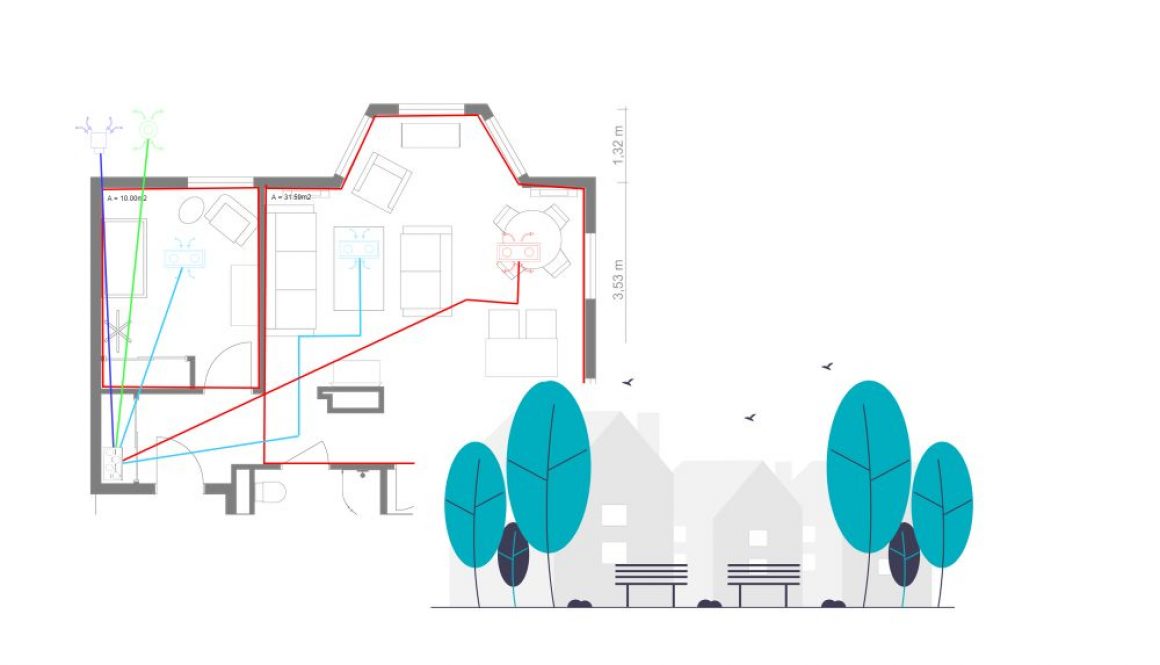
How to calculate Microchannels with Unilab Microchannel
MICROCHANNEL HEAT EXCHANGERSÂ offer a long list of features not found in other condensers. Parallel flow increases performance by up […]
A new UNILAB COILS update is available! Build 200728 is available for all users under regular technical support, which can […]
A BIM can be defined as a kind of dossier storing information about a building. It is neither a product nor software, but rather a digital representation of an object’s physical and functional features. The acronym stands for ‘Building Information Modelling’.
The issue of an e-invoice is mandatory from 1 January 2019. Since then, the legislation has undergone several amendments and updates, the latest of which came into force on 4 May 2020.
In the lockdown period imposed by Covid-19, VPN and Smart-Working were two of the most pronounced words. Those who have experienced working from home have certainly found themselves dealing with the Virtual Private Network: a fundamental solution to allow secure connections during remote work activities.
In order to be able to share the component libraries in SHARK among multiple users, SQL SERVER is essential.
If the customer already has SQL Server Express, Unilab can configure the Shark database to work and connect with it (the activity is provided on demand), and the components’ archive will be shared within your office!
COILS and TRANSCRITICAL GAS COOLER both have CO2, yet they perform a different kind of calculation. Is it only a matter of subcritical vs transcritical? Let’s find out!
In this article we briefly explain the main calculation modes of Coils, and the point of view with which our program analyzes the various modes.
During the recent Covid-19 pandemic, ICT (Information Communication Technology) has played a crucial role. Thanks to computers, the internet, and all the other infrastructures connected to that sector, Italy has continued to ‘function’ even at the height of lockdown.
F-Gases (or fluorinated gases) are one of the main causes of the global greenhouse effect. Reducing F-Gas emissions is one of the objectives that the European Commission has been trying to achieve for several years, via the introduction of specific regulations.
The adoption of transcritical CO2 as a refrigerant technology for air conditioning systems is currently undergoing a rapid increase. The success of this gas can be attributed to several factors, which have convinced more and more people to choose that solution over the usual options.
This website uses cookies to enhance your experience. Some are essential for site functionality, while others help us analyze and improve your usage experience. Please review your options and make your choice.
If you are under 16 years old, please ensure that you have received consent from your parent or guardian for any non-essential cookies.
Your privacy is important to us. You can adjust your cookie settings at any time. For more information about how we use data, please read our privacy policy. You may change your preferences at any time by clicking on the settings button below.
Note that if you choose to disable some types of cookies, it may impact your experience of the site and the services we are able to offer.
Some required resources have been blocked, which can affect third-party services and may cause the site to not function properly.
This website uses cookies to enhance your browsing experience and ensure the site functions properly. By continuing to use this site, you acknowledge and accept our use of cookies.