Webinars: types, advantages and disadvantages
What are the different types of webinar and what are their advantages and disadvantages?
Introducing CRM could enable staff to be more efficient during projects, to understand customers better and to automate routine tasks.
In this fourth and final technical article focused on glide, we analyze once again the practical implications of this phenomenon, focusing mainly on the movement of the fluid along the refrigerant circuit.
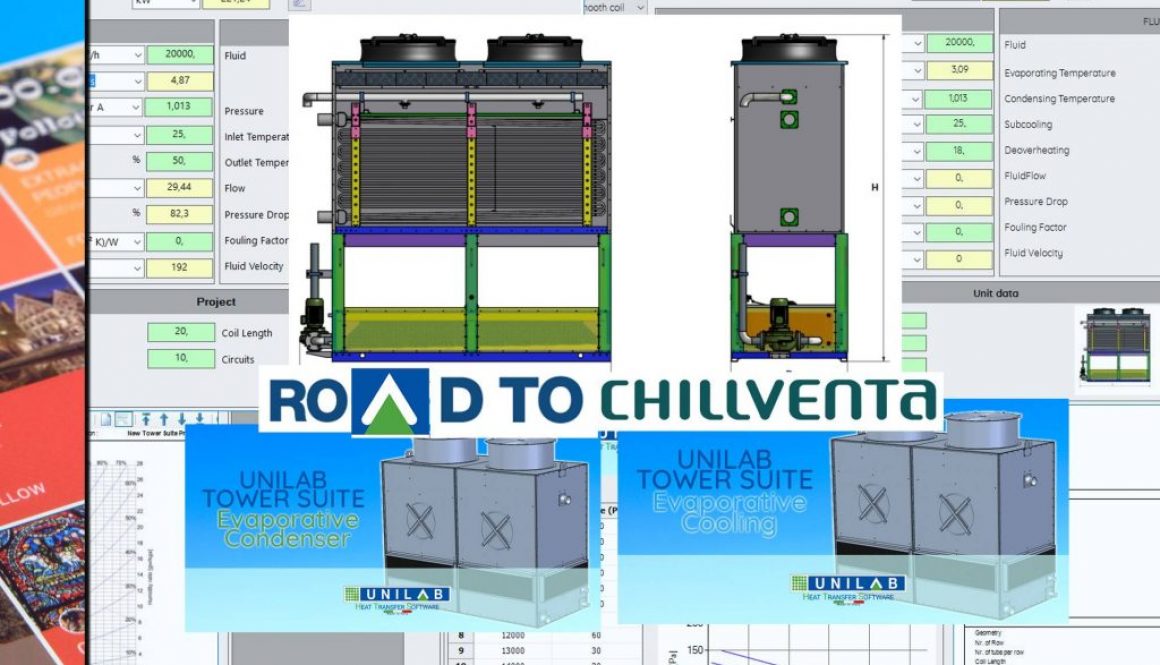
Chillventa, the premier exhibition of the European HVAC&R industry, is a particularly eagerly awaited and heartened fix event for Unilab.
We inform our kind customers in advance that our technical department, our developers and our customer care department will be closed from August 6 to August 17, 2018 included.
Some considerations after ACHEMA 2018, and a special thanks to everyone who visited our booth and tried our software!
The Internet of Things has been in the news a lot in recent years, but what exactly is it? The term Internet of Things (often known as IoT), is a neologism coined by Kevin Ashton
The hypothesis of preventing the increase in global temperature from exceeding one and a half degrees, as promised at the 2015 Paris summit, now appears to have as little as a 1% chance of success
Today is the first day of ACHEMA 2018. Our Team was very positive impressed about the warm welcome from numerous friends and customers. Here some pictures
In the previous article of this series we had indicated that, as long as a zeotropic mixture has glide values lower than 2°K, its use in refrigeration circuits does not pose significant problems compared to the use of “homologous” one-component refrigerating fluids
Electric cars are part of a continually expanding market, which has developed significantly. Such vehicles are fitted with rechargeable batteries and are powered exclusively by electricity.
What is a server and what is its function? A few words also to SQL Servers (Structured Query Language)
This website uses cookies to enhance your experience. Some are essential for site functionality, while others help us analyze and improve your usage experience. Please review your options and make your choice.
If you are under 16 years old, please ensure that you have received consent from your parent or guardian for any non-essential cookies.
Your privacy is important to us. You can adjust your cookie settings at any time. For more information about how we use data, please read our privacy policy. You may change your preferences at any time by clicking on the settings button below.
Note that if you choose to disable some types of cookies, it may impact your experience of the site and the services we are able to offer.
Some required resources have been blocked, which can affect third-party services and may cause the site to not function properly.
This website uses cookies to enhance your browsing experience and ensure the site functions properly. By continuing to use this site, you acknowledge and accept our use of cookies.